Tell us about the job
Takes about a minute. No obligation.
Sizing a furnace for this county starts with understanding how little time the burner gets to rest. Homes in Chittenden County, VT run heat about nine months a year, from September through May. The ignition system fires, the heat exchanger expands and contracts, and the blower runs through stretch after stretch with no long summer pause to speak of. A contractor who skips a proper load calculation and installs a unit that short-cycles will see the consequences in the heat exchanger long before a homeowner expects to replace it.
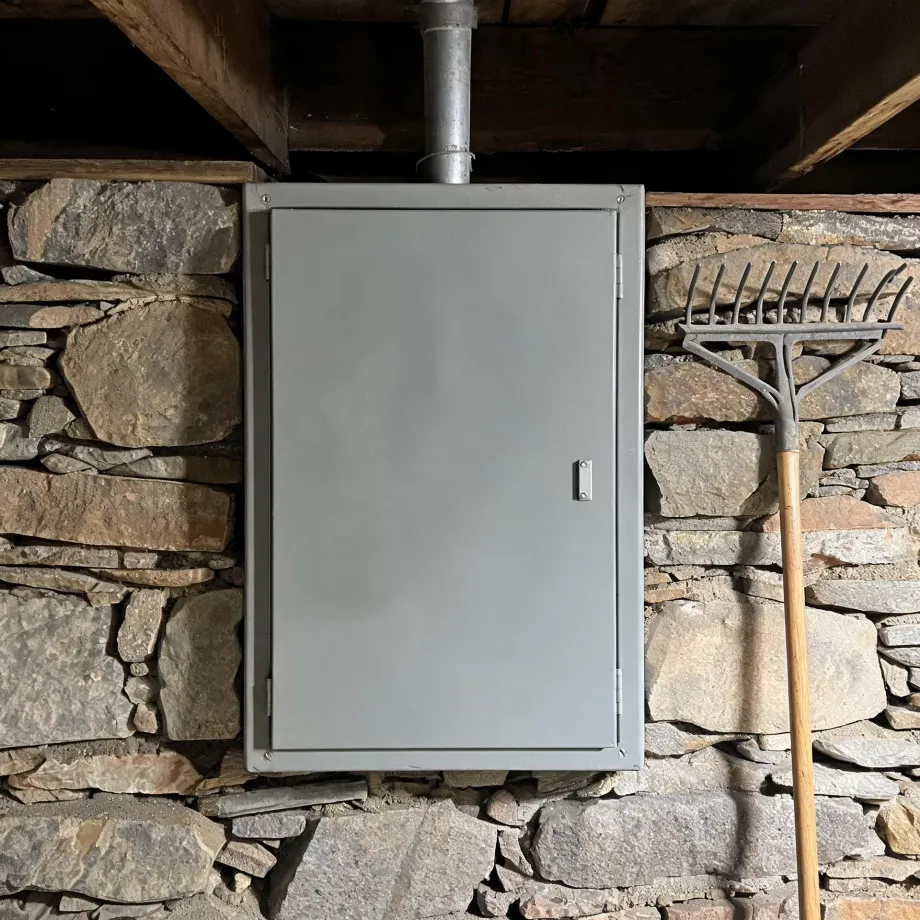
Existing ductwork is what shapes a furnace installation here more than the equipment selection does. Half the homes in Chittenden County, Vermont were built in 1981 or earlier (2020-2024 ACS 5-year). Houses built by that point were ducted for the systems of their era, and the runs, returns, and trunk dimensions that were cut into those walls were sized for different loads and different equipment profiles than what a contractor installs today. A new furnace drops into that existing framework, and whether the framework carries it without restriction or needs alteration is what the contractor has to determine before the job can be scoped and priced.
What a Furnace Installation Puts in Your Home
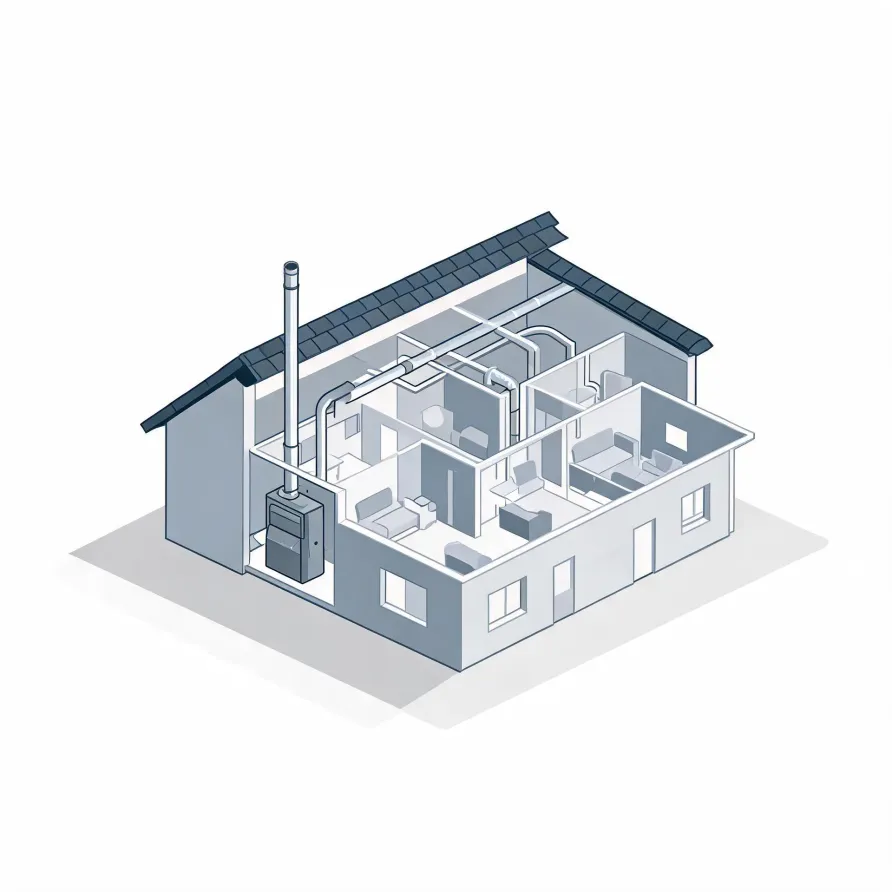
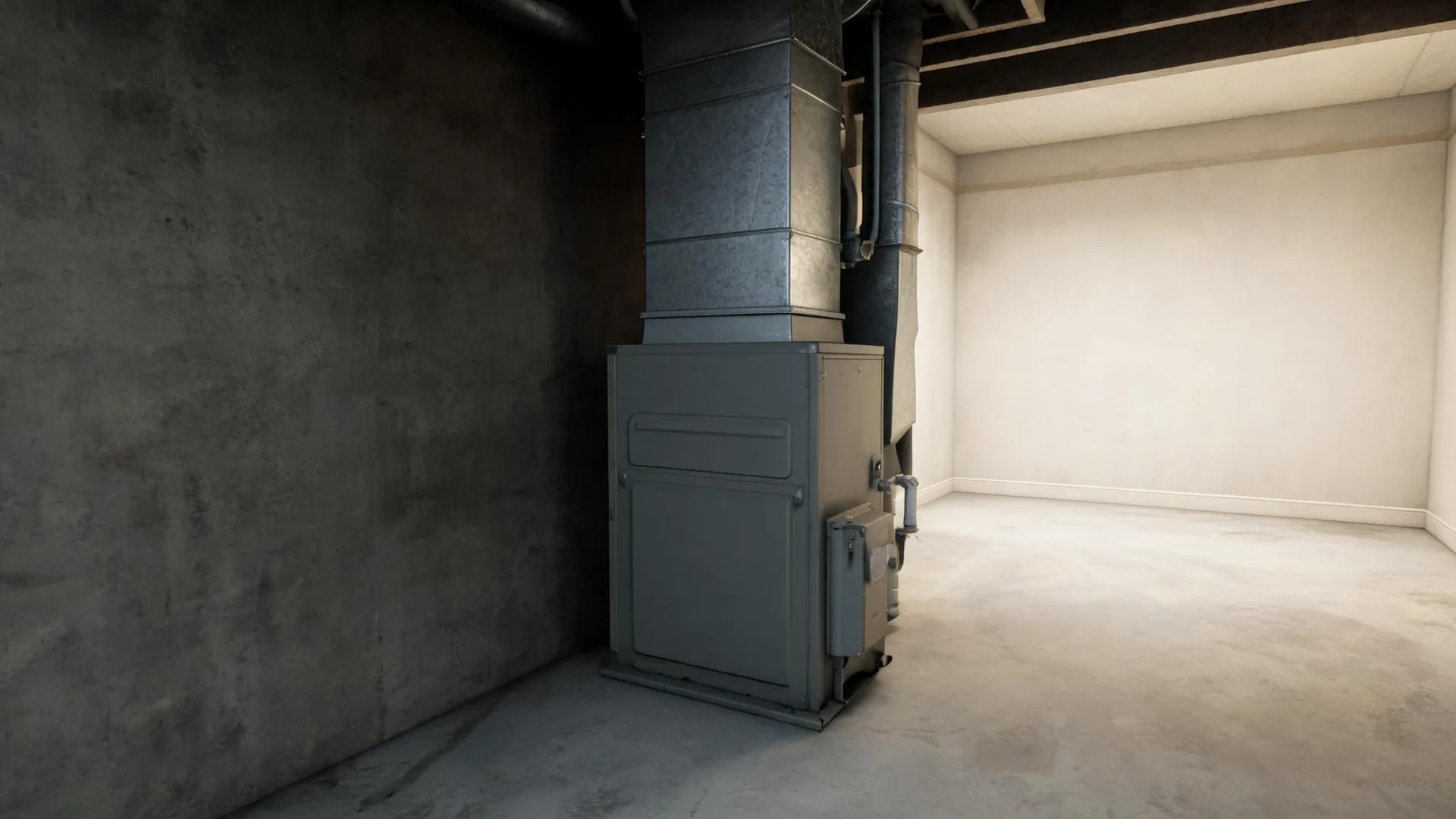
The furnace itself sits in a utility space, most often a basement or mechanical room, and is the unit that produces heat. Beside it, or built into it depending on the model, the air handler moves conditioned air into the duct system. These are the pieces the contractor places and connects first.
The flue pipe runs from the furnace up and out of the house, carrying combustion gases away from the living space. The thermostat mounts on an interior wall and serves as the control point for the whole system. A condensate drain line also runs from the unit to a floor drain or pump when the furnace is a high-efficiency model.
The drawing shows a typical layout, and a licensed contractor determines exactly what applies to your house based on its construction and existing setup.
Find a contractor in Chittenden CountyChittenden County, by the numbers
196 severe weather events were recorded in Chittenden County, Vermont between 2015 and 2024.
NOAA National Centers for Environmental Information, Storm Events Database, bulk CSV export, events 2015-01-01 through 2024-12-31.Half the homes in Chittenden County, Vermont were built in 1981 or earlier (2020-2024 ACS 5-year).
U.S. Census Bureau, 2020-2024 American Community Survey 5-Year EstimatesChittenden County, Vermont holds 74,888 housing units (2020-2024 ACS 5-year).
U.S. Census Bureau, 2020-2024 American Community Survey 5-Year EstimatesOwners occupy 63.9% of the occupied homes in Chittenden County, Vermont (2020-2024 ACS 5-year).
U.S. Census Bureau, 2020-2024 American Community Survey 5-Year EstimatesFurnace Installation Rules for Chittenden County, Vermont6 codes, standards, and licensing rules
What a furnace installation looks like in Chittenden County
Non-weatherized gas furnaces manufactured on or after November 19, 2015 must reach 80.0 percent AFUE.
Non-weatherized oil-fired furnaces manufactured on or after November 19, 2015 must reach 83.0 percent AFUE.
Mobile home gas furnaces manufactured on or after November 19, 2015 must reach 80.0 percent AFUE.
Non-weatherized gas furnaces manufactured on or after December 18, 2028 must reach 95.0 percent AFUE, up from the 80.0 percent minimum that applies to units manufactured before that date.
Licensing and Legal Requirements in Chittenden County, Vermont
Vermont splits the trade across two specialty licences and a contractor may hold one without the other: field A1 covers automatic gas or oil heating including geo-thermal and ground source heat pumps, and field C3 covers refrigeration or air conditioning including air-to-air heat pumps.
Vermont reaches HVAC work through its electricians’ licence rather than an HVAC licence, and the requirement stops at the front door of a house: anyone performing electrical work in Vermont must be licensed as an electrician unless the work is in a residential building containing two or fewer dwelling units.
Severe Weather Events in Chittenden County
Furnace systems in Chittenden County carry a workload shaped by local conditions, and weather pressure is part of what drives equipment sizing, wear, and replacement cycles. Knowing what this area has seen puts the installation decision in its proper context.
196 severe weather events, 2015–2024. Source: NOAA National Centers for Environmental Information, Storm Events Database.