
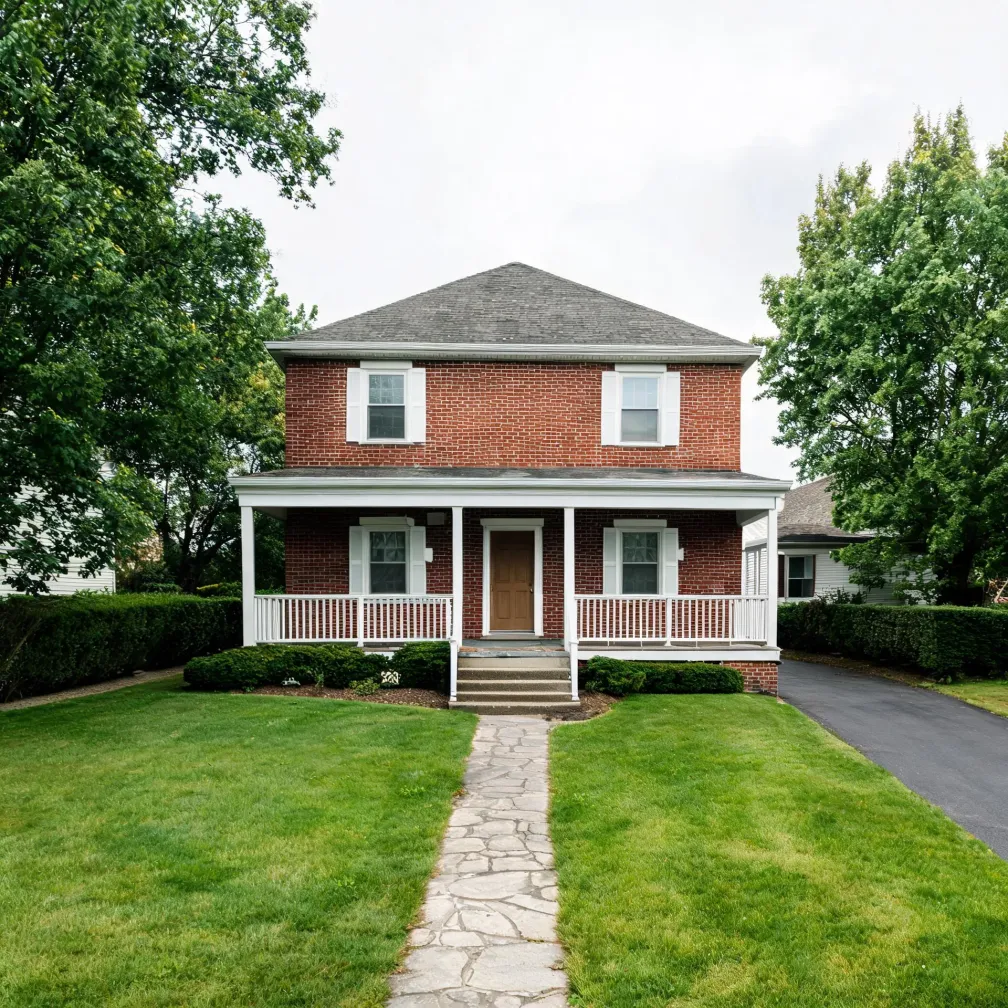
What Vermont homes are up against.
NOAA National Centers for Environmental Information, Storm Events Database, bulk CSV export, events 2015-01-01 through 2024-12-31. · U.S. Census Bureau, 2020-2024 American Community Survey 5-Year Estimates

A furnace that barely keeps up with demand in a mild week will fall short badly once the season is fully underway, and Vermont's heating season leaves little room to delay finding that out. Homes in Vermont run heat about nine months a year, from September through May. A burner cycling through that span accumulates wear on the ignition system and heat exchanger at a pace that a shorter season simply does not produce, which means installation quality and sizing decisions carry more weight here than in places where the equipment rests longer. What a contractor works out before the job starts, from duct sizing to equipment output, shows up in the equipment's performance across every one of those months.
A quote for a new furnace starts with what is already in the house, not just what the homeowner wants installed. Half the homes in Vermont were built in 1976 or earlier (2020-2024 ACS 5-year). Ductwork sized for an older system and electrical panels wired before modern load requirements are what contractors find and have to assess before any specification is written. A system that fits the heating load on paper can still require duct modifications or a panel upgrade once someone opens the access panels and measures what is actually there.
Does your county put extra stress on your furnace?
2015–2024 · Source: NOAA National Centers for Environmental Information, Storm Events Database.
A furnace working through heavy snow loads, ice accumulation, and extended deep-cold stretches faces different demands than one running in a mild climate. Where equipment sits, how it vents, and what capacity it carries all depend on what outdoor conditions it will be asked to handle year after year. The contractor you are matched with knows Vermont's conditions and sizes and positions equipment accordingly.
Vermont HVAC Installation and Repair License Requirements
Vermont sets its own rules for who is permitted to do HVAC installation and repair work in the state. The provisions below are drawn directly from state sources, not paraphrased.
Vermont splits the trade across two specialty licences and a contractor may hold one without the other: field A1 covers automatic gas or oil heating including geo-thermal and ground source heat pumps, and field C3 covers refrigeration or air conditioning including air-to-air heat pumps.
A state licensing requirement means the work is reserved for contractors who have met Vermont's standards for this trade. Unlicensed individuals are not authorized to perform it, regardless of price or availability. The contractors this site routes requests to hold the license these provisions describe, and that is the condition a request meets before it goes anywhere.
Read the Source Provisions2 provisions
Vermont splits the trade across two specialty licences and a contractor may hold one without the other: field A1 covers automatic gas or oil heating including geo-thermal and ground source heat pumps, and field C3 covers refrigeration or air conditioning including air-to-air heat pumps.
Vermont reaches HVAC work through its electricians’ licence rather than an HVAC licence, and the requirement stops at the front door of a house: anyone performing electrical work in Vermont must be licensed as an electrician unless the work is in a residential building containing two or fewer dwelling units.