Tell us about the job
Takes about a minute. No obligation.
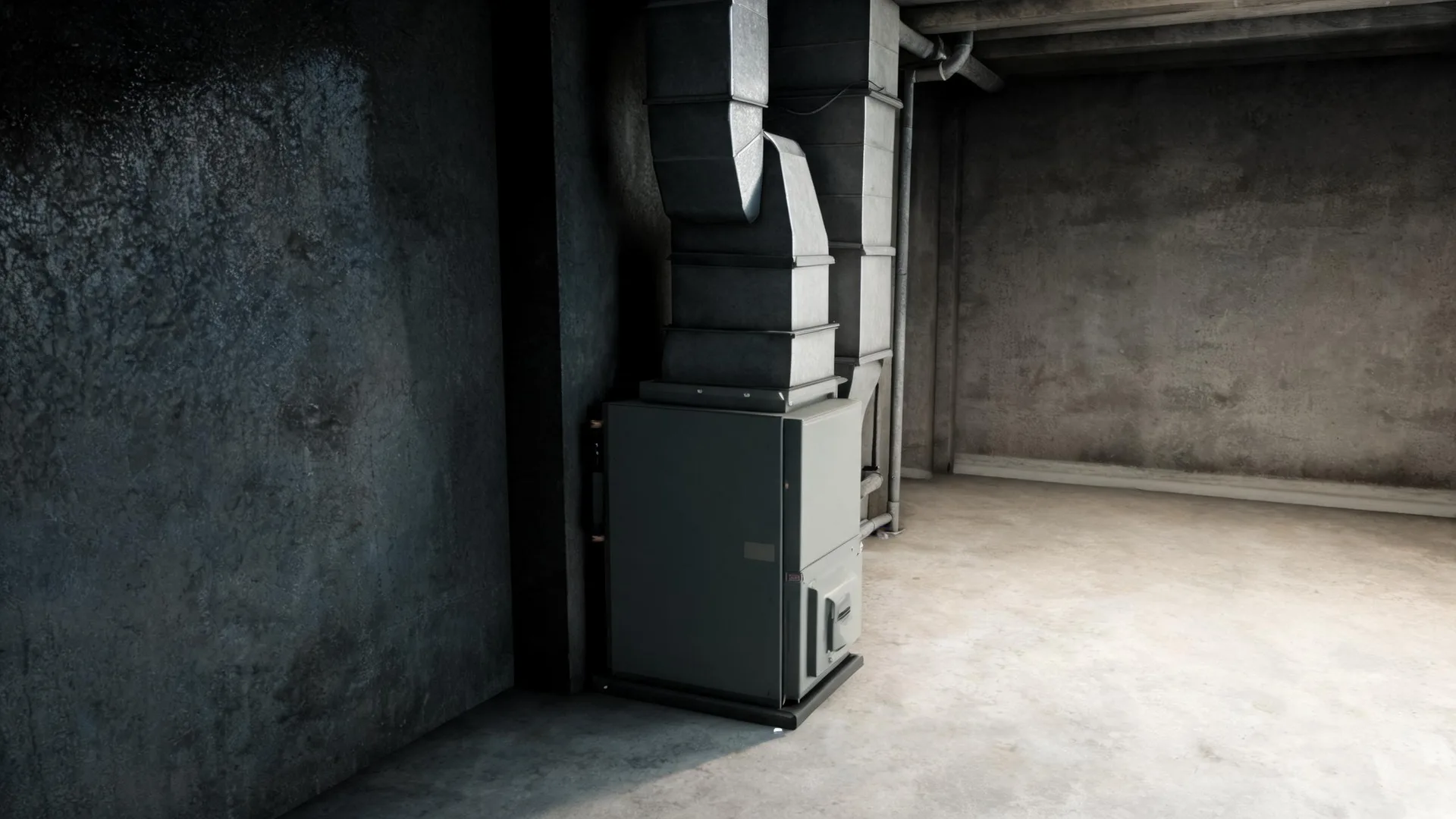
The burner, the igniter, and the heat exchanger on a furnace here cycle hard for most of the calendar, and the parts that fail most often in this county are the ones that cycle most. Homes in Grand Isle County, VT run heat about nine months a year, from September through May. A contractor coming out to diagnose a furnace repair in Grand Isle County checks the ignition system and heat exchanger condition early, because those are the components that absorb the load of a season this long. Cracks in a heat exchanger or a weakening igniter do not always announce themselves until the system has been running again for a while.
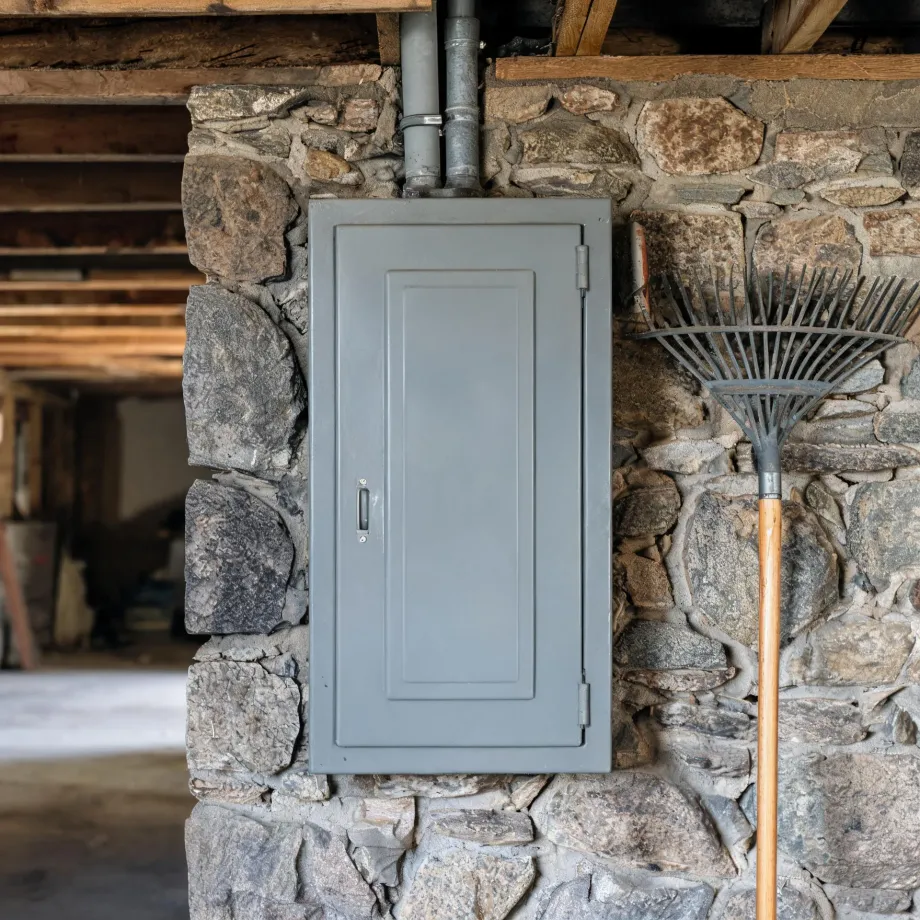
Furnaces in houses built for earlier generations of equipment have often been swapped out or patched over the decades, and each change leaves behind a system whose internals do not match any single repair manual. Half the homes in Grand Isle County, Vermont were built in 1984 or earlier (2020-2024 ACS 5-year). When a contractor opens a unit here, the question is whether the heat exchanger, inducer, or control board inside still has a supply chain behind it. If the parts are discontinued, the repair scope changes before the quote does.
The Parts of a Furnace a Contractor Checks First
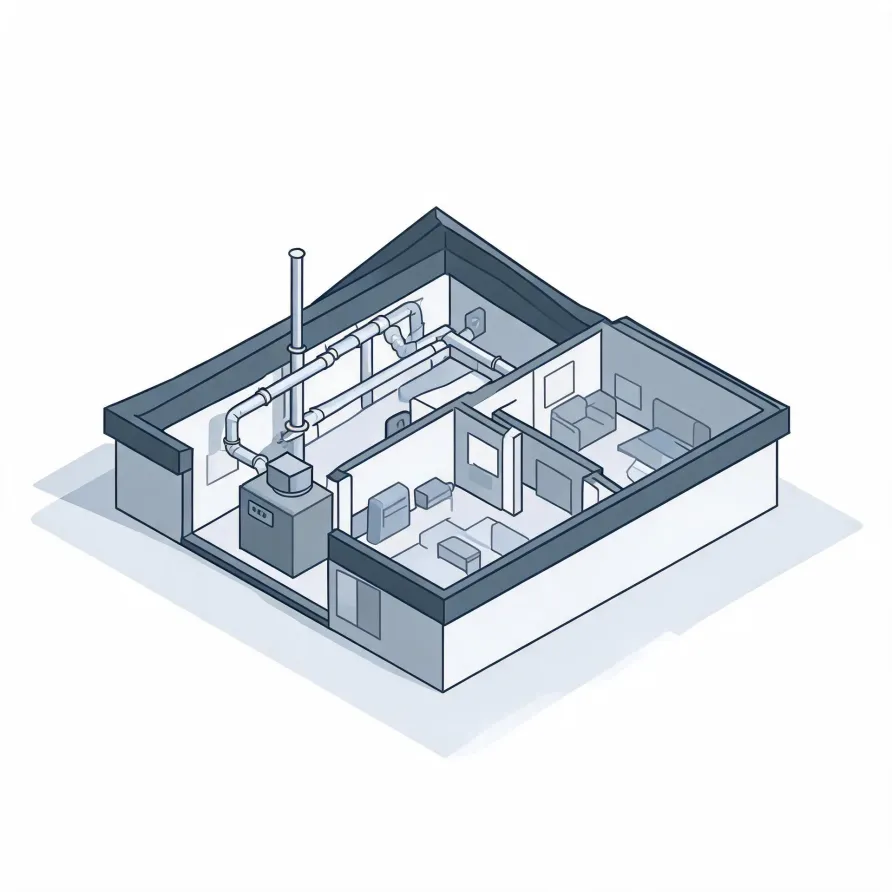
The furnace itself sits in the basement, utility room, or crawlspace and is the piece a contractor goes to first. Inside it, the heat exchanger does the work of warming the air that moves through your home. A cracked or failing heat exchanger is one of the more serious faults a contractor looks for, because it can allow combustion gases to enter the living space.
The burner assembly and the igniter sit inside the furnace cabinet and are common failure points when a furnace stops producing heat or short-cycles. The blower motor and its fan wheel push conditioned air through the supply side and draw return air back in. The flue pipe runs from the cabinet to an exterior wall or up through the roof, and a contractor checks it for blockage or damage as part of any repair call.
The drawing shows a typical furnace layout, and a licensed contractor determines which components apply to your specific system and what work they require.
Find a contractor in Grand Isle CountyGrand Isle County, Vermont, by the numbers
53 severe weather events were recorded in Grand Isle County, Vermont between 2015 and 2024.
NOAA National Centers for Environmental Information, Storm Events Database, bulk CSV export, events 2015-01-01 through 2024-12-31.Half the homes in Grand Isle County, Vermont were built in 1984 or earlier (2020-2024 ACS 5-year).
U.S. Census Bureau, 2020-2024 American Community Survey 5-Year EstimatesGrand Isle County, Vermont holds 5,326 housing units (2020-2024 ACS 5-year).
U.S. Census Bureau, 2020-2024 American Community Survey 5-Year EstimatesOwners occupy 89.9% of the occupied homes in Grand Isle County, Vermont (2020-2024 ACS 5-year).
U.S. Census Bureau, 2020-2024 American Community Survey 5-Year EstimatesCodes & Standards Covering Furnace Repair in Grand Isle County, Vermont6 sourced rules and standards
What the Repair Visit Looks Like
Non-weatherized gas furnaces manufactured on or after November 19, 2015 must reach 80.0 percent AFUE.
Non-weatherized oil-fired furnaces manufactured on or after November 19, 2015 must reach 83.0 percent AFUE.
Mobile home gas furnaces manufactured on or after November 19, 2015 must reach 80.0 percent AFUE.
Non-weatherized gas furnaces manufactured on or after December 18, 2028 must reach 95.0 percent AFUE, up from the 80.0 percent minimum that applies to units manufactured before that date.
Rules That Apply to Furnace Repair Work in Grand Isle County, Vermont
Vermont splits the trade across two specialty licences and a contractor may hold one without the other: field A1 covers automatic gas or oil heating including geo-thermal and ground source heat pumps, and field C3 covers refrigeration or air conditioning including air-to-air heat pumps.
Vermont reaches HVAC work through its electricians’ licence rather than an HVAC licence, and the requirement stops at the front door of a house: anyone performing electrical work in Vermont must be licensed as an electrician unless the work is in a residential building containing two or fewer dwelling units.
Weather Pressure on Furnaces in Grand Isle County
Heating equipment in Grand Isle County works harder when the weather does. Storms, cold snaps, and sharp temperature swings put real load on furnaces, and that load shows up as repair calls.
53 severe weather events, 2015–2024. Source: NOAA National Centers for Environmental Information, Storm Events Database.