Tell us about the job
Takes about a minute. No obligation.
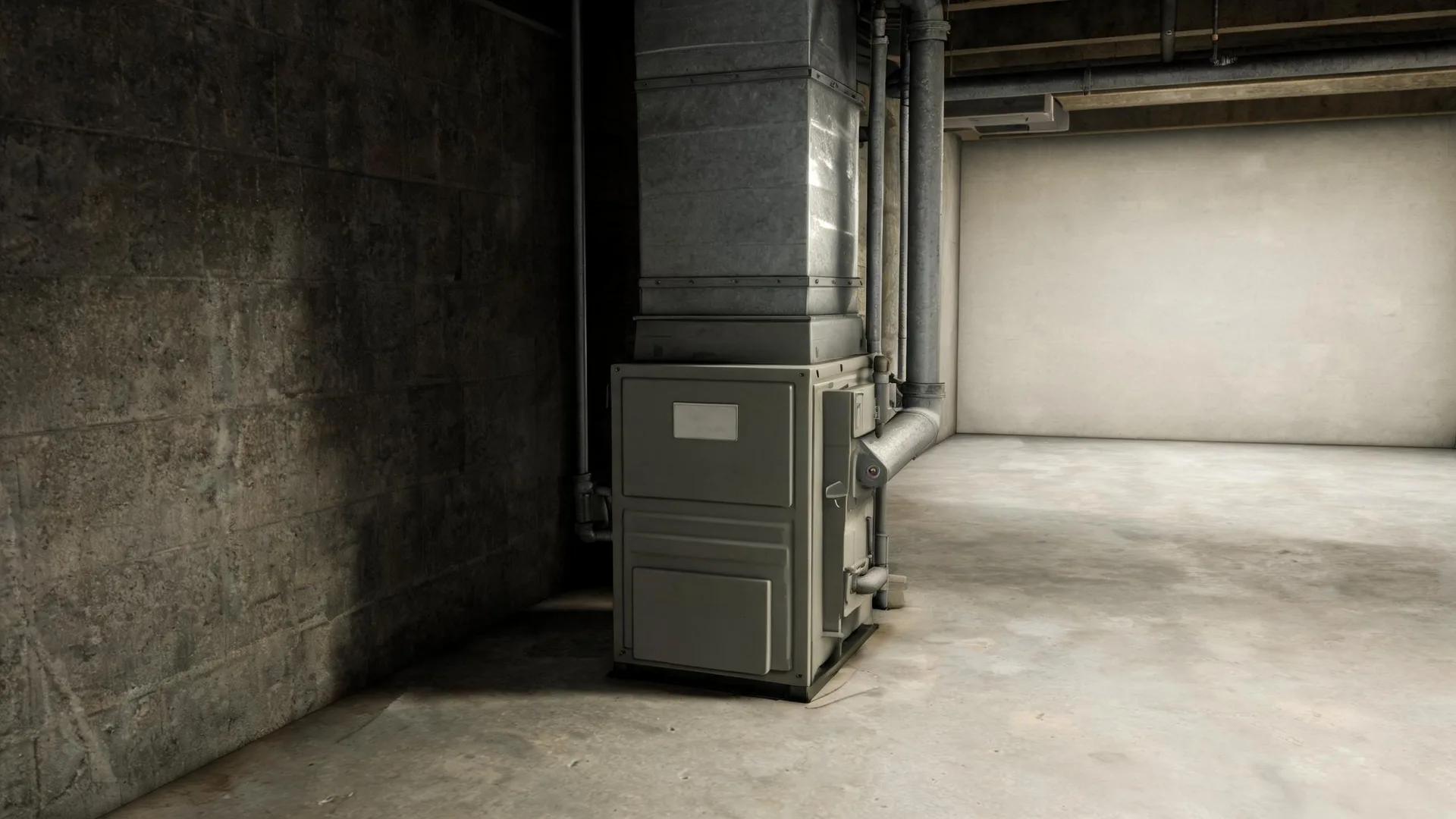
A furnace repair call here starts at the burner and the heat exchanger, because those are the parts that have been working. Homes in Washington County, VT run heat about nine months a year, from September through May. The ignition system cycles every time the burner fires, and after months of that, the failure modes a contractor finds are almost always in the combustion side of the system. Cracks in the heat exchanger, worn igniter elements, and carbon buildup on the burner ports are what extended runtime produces. A contractor who skips straight to the controls or the blower motor is working the wrong end of the job.
Older furnaces in stock like this one tend to outlast the supply chains built around them. Half the homes in Washington County, Vermont were built in 1973 or earlier (2020-2024 ACS 5-year). A contractor opening a heat exchanger or a failed inducer assembly in a house built around that era of equipment will often find that the part it takes has been superseded, discontinued, or consolidated into a different component number that does not fit the original housing. That is not always a dead end, but it changes what the repair costs and how long it takes to complete.
The Parts of a Furnace a Contractor Checks First
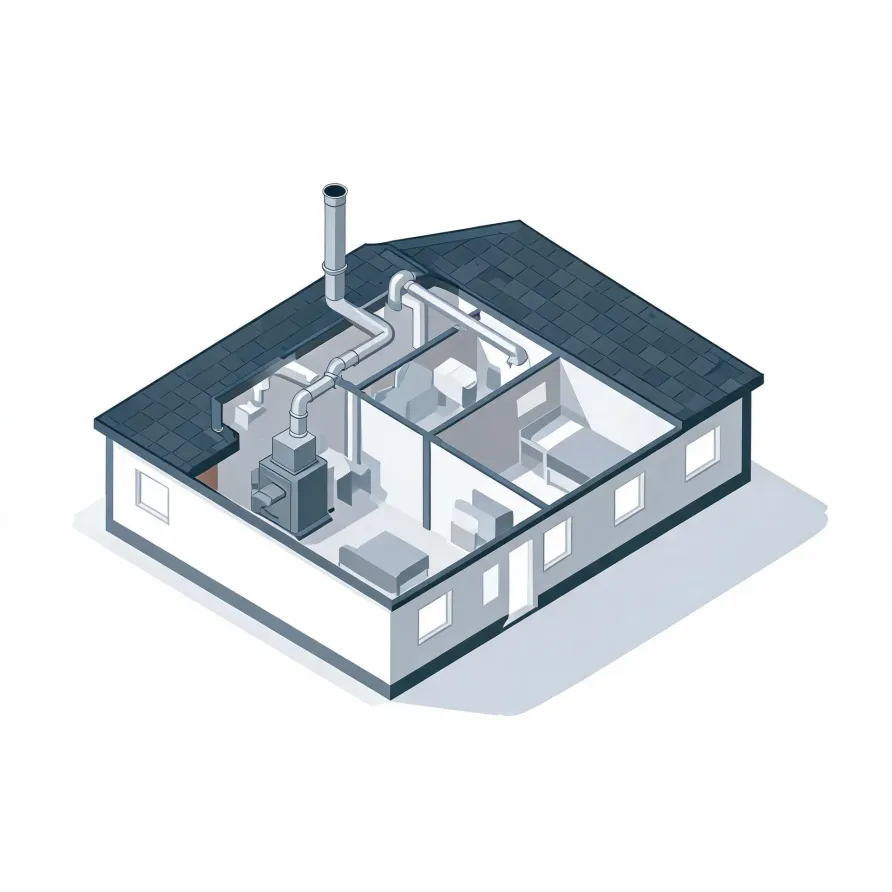
The heat exchanger sits inside the furnace cabinet in the basement or utility room and is the piece a contractor reaches first when something is wrong. Cracks or corrosion there mean combustion gases can escape into the living space. The burner assembly, which sits just below it, is the next stop: a burner that misfires or runs unevenly shows up fast in how the furnace lights and holds its flame.
The blower motor and its wheel move conditioned air out of the cabinet and into the supply side of the house. When that motor is the problem, airflow drops or stops entirely. The draft inducer, mounted at the top of the cabinet near the flue connection, pulls exhaust gases out of the heat exchanger; a failing inducer often triggers a pressure switch fault that shuts the whole system down.
The drawing shows a general furnace layout, and a licensed contractor determines which components apply to the specific equipment and installation in your home.
Find a contractor in Washington CountyWashington County, Vermont, by the numbers
113 severe weather events were recorded in Washington County, Vermont between 2015 and 2024.
NOAA National Centers for Environmental Information, Storm Events Database, bulk CSV export, events 2015-01-01 through 2024-12-31.Half the homes in Washington County, Vermont were built in 1973 or earlier (2020-2024 ACS 5-year).
U.S. Census Bureau, 2020-2024 American Community Survey 5-Year EstimatesWashington County, Vermont holds 31,004 housing units (2020-2024 ACS 5-year).
U.S. Census Bureau, 2020-2024 American Community Survey 5-Year EstimatesOwners occupy 73.7% of the occupied homes in Washington County, Vermont (2020-2024 ACS 5-year).
U.S. Census Bureau, 2020-2024 American Community Survey 5-Year EstimatesCodes & Standards Governing Furnace Repair in Washington County, Vermont6 sourced rules and standards
What Happens When a Contractor Comes Out
Non-weatherized gas furnaces manufactured on or after November 19, 2015 must reach 80.0 percent AFUE.
Non-weatherized oil-fired furnaces manufactured on or after November 19, 2015 must reach 83.0 percent AFUE.
Mobile home gas furnaces manufactured on or after November 19, 2015 must reach 80.0 percent AFUE.
Non-weatherized gas furnaces manufactured on or after December 18, 2028 must reach 95.0 percent AFUE, up from the 80.0 percent minimum that applies to units manufactured before that date.
Licensing and Legal Requirements in Washington County, Vermont
Vermont splits the trade across two specialty licences and a contractor may hold one without the other: field A1 covers automatic gas or oil heating including geo-thermal and ground source heat pumps, and field C3 covers refrigeration or air conditioning including air-to-air heat pumps.
Vermont reaches HVAC work through its electricians’ licence rather than an HVAC licence, and the requirement stops at the front door of a house: anyone performing electrical work in Vermont must be licensed as an electrician unless the work is in a residential building containing two or fewer dwelling units.
Severe Weather Events in Washington County, Vermont
Extreme weather puts hours on a furnace fast, cycling it hard through cold snaps and power fluctuations that wear components before their time. How often that pressure hits is a local fact, and it shapes what repair work in Washington County actually looks like.
113 severe weather events, 2015–2024. Source: NOAA National Centers for Environmental Information, Storm Events Database.