Tell us about the job
Takes about a minute. No obligation.
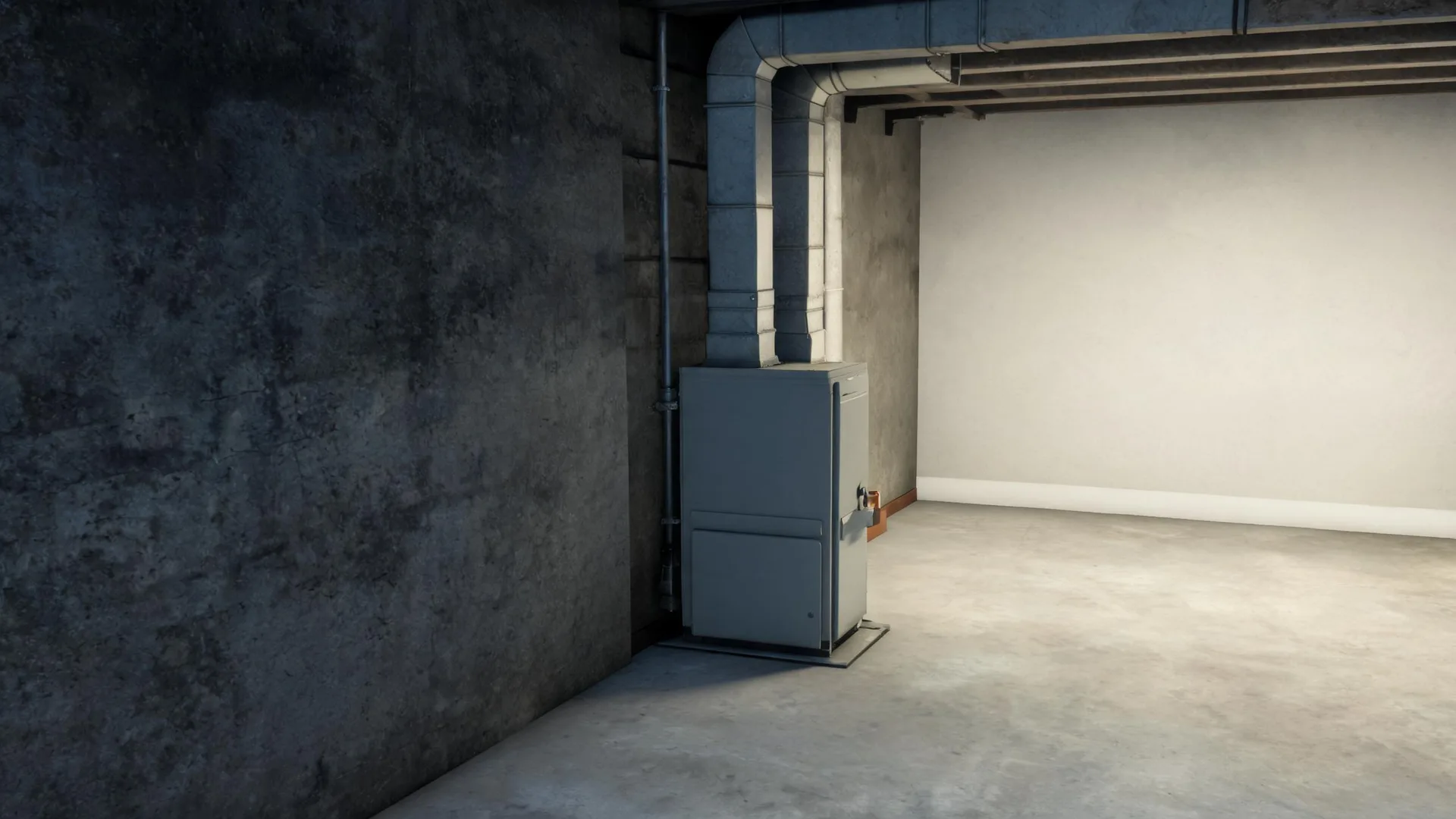
A furnace repair in Windham County starts with a question a contractor has to answer before anything else: which part gave out under load, and which part failed because another one already had. Homes in Windham County, VT run heat about nine months a year, from September through May. The burner, the heat exchanger, and the ignition system cycle together through that span, and wear on one puts strain on the others. When a furnace comes in for repair here, a contractor checks the ignition system and the heat exchanger together, because a failed igniter that ran long enough often leaves the exchanger in questionable shape too.
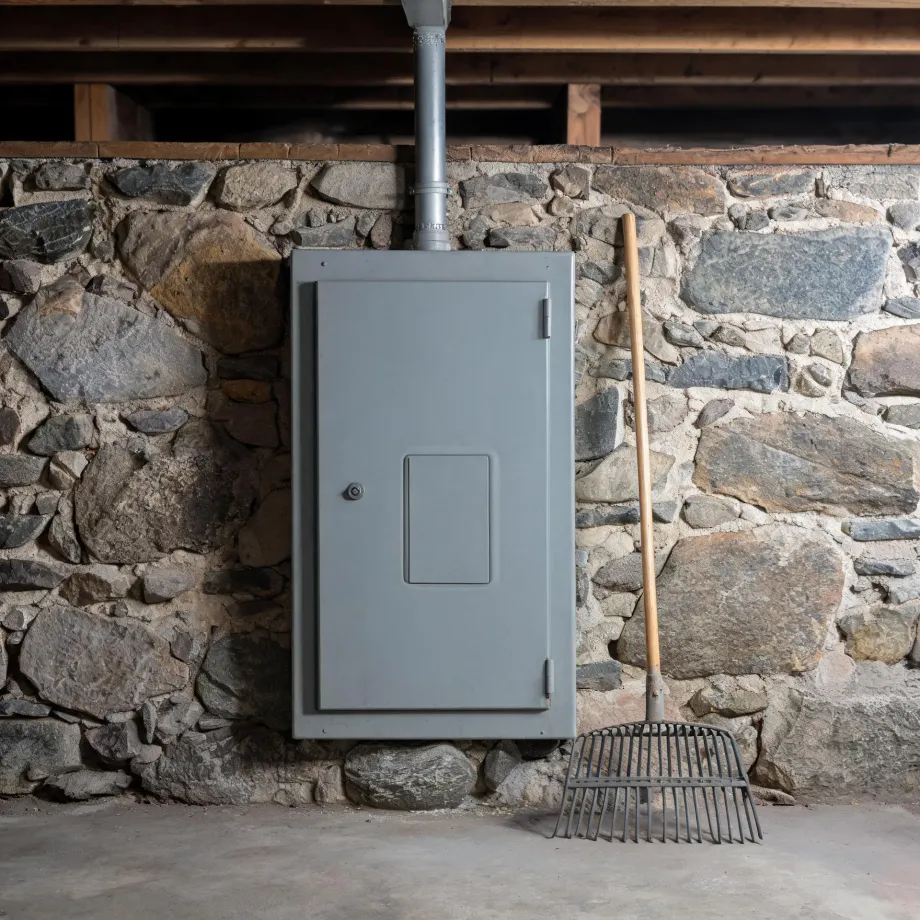
Older ductwork in Windham County houses tends to carry the history of every system that ran through it, and a furnace that was not the original equipment still sits inside walls and connections laid out for something else. Half the homes in Windham County, Vermont were built in 1974 or earlier (2020-2024 ACS 5-year). When a contractor opens a furnace here, what decides the scope is whether the components that particular unit requires are still in production. A heat exchanger or control board for a system two or three replacements removed from the original install can be discontinued, and that changes what the repair costs and whether repair is even the path forward.
The Parts of a Furnace a Contractor Checks First
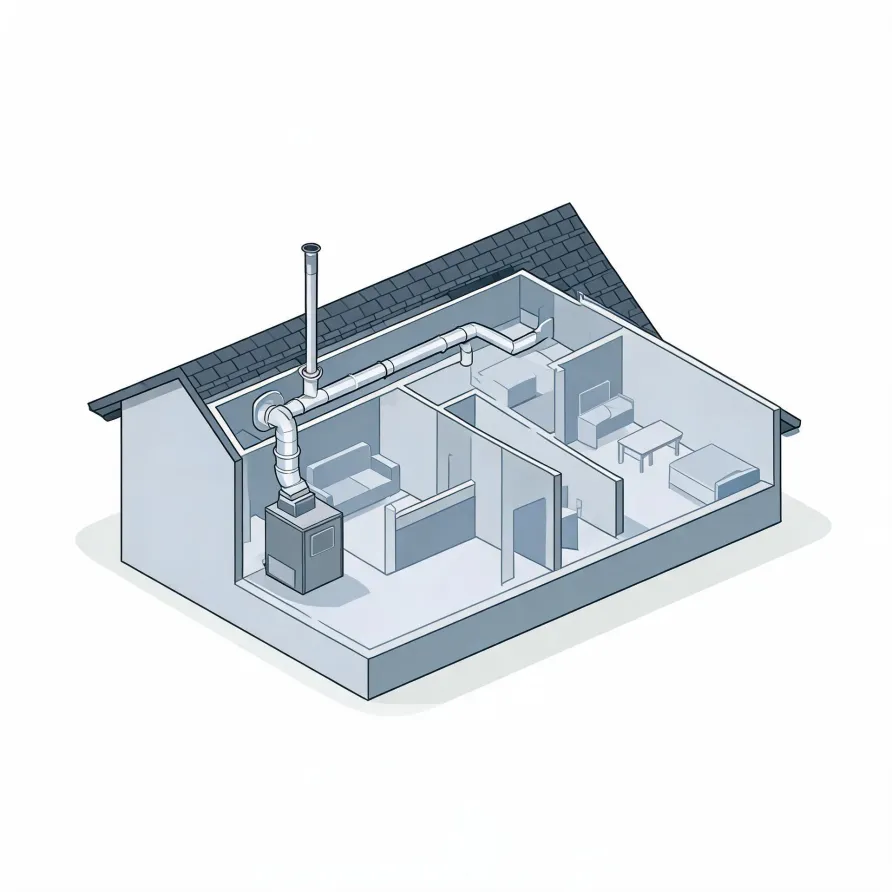
The furnace itself sits in a basement, utility room, or mechanical closet and is the piece a contractor goes to first. Inside it, the heat exchanger is the part most worth understanding: when it cracks, combustion gases can enter the living space, so a contractor inspects it closely. The burners, which produce the flame that heats that exchanger, are another early stop.
The blower motor pushes conditioned air out of the furnace and into the supply side of the house. Near it, the draft inducer pulls exhaust gases out through the flue. The control board ties these components together, reading signals from the thermostat and telling each part when to run, so a fault there can look like a fault almost anywhere else.
The drawing shows a typical furnace layout, and a licensed contractor determines which components apply and what condition they are in for your specific home.
Find a contractor in Windham CountyWindham County by the numbers
220 severe weather events were recorded in Windham County, Vermont between 2015 and 2024.
NOAA National Centers for Environmental Information, Storm Events Database, bulk CSV export, events 2015-01-01 through 2024-12-31.Half the homes in Windham County, Vermont were built in 1974 or earlier (2020-2024 ACS 5-year).
U.S. Census Bureau, 2020-2024 American Community Survey 5-Year EstimatesWindham County, Vermont holds 30,183 housing units (2020-2024 ACS 5-year).
U.S. Census Bureau, 2020-2024 American Community Survey 5-Year EstimatesOwners occupy 73.9% of the occupied homes in Windham County, Vermont (2020-2024 ACS 5-year).
U.S. Census Bureau, 2020-2024 American Community Survey 5-Year EstimatesCodes & Standards Governing Furnace Repair in Windham County, Vermont6 sourced rules & standards
What the repair visit looks like
Non-weatherized gas furnaces manufactured on or after November 19, 2015 must reach 80.0 percent AFUE.
Non-weatherized oil-fired furnaces manufactured on or after November 19, 2015 must reach 83.0 percent AFUE.
Mobile home gas furnaces manufactured on or after November 19, 2015 must reach 80.0 percent AFUE.
Non-weatherized gas furnaces manufactured on or after December 18, 2028 must reach 95.0 percent AFUE, up from the 80.0 percent minimum that applies to units manufactured before that date.
Licensing Rules for HVAC Repair in Windham County, Vermont
Vermont splits the trade across two specialty licences and a contractor may hold one without the other: field A1 covers automatic gas or oil heating including geo-thermal and ground source heat pumps, and field C3 covers refrigeration or air conditioning including air-to-air heat pumps.
Vermont reaches HVAC work through its electricians’ licence rather than an HVAC licence, and the requirement stops at the front door of a house: anyone performing electrical work in Vermont must be licensed as an electrician unless the work is in a residential building containing two or fewer dwelling units.
Weather Stress on Heating Systems in Windham County
Furnaces in Vermont work against whatever the climate puts on them, and that workload adds up over years of hard winters and weather swings. Repair demand in Windham County tracks directly with how hard local conditions push the equipment.
220 severe weather events, 2015–2024. Source: NOAA National Centers for Environmental Information, Storm Events Database.