What size furnace a Vermont home needs

Send the form and the search for an installer is over.

Hand off my installation

What size furnace do I need for my house in Vermont?

You want a furnace that's actually the right size for your house, not just whatever the last one happened to be. That matters more in a cold climate state like Vermont, where an undersized furnace runs nonstop and never quite keeps up, and an oversized one short cycles and wears out early. The right number comes from your house, not a chart you found online.

It comes from a load calculation, not your square footage

There's no single furnace size for a house your square footage. The number that matters comes from a heat loss calculation, done room by room, that accounts for your insulation, your windows, how the house is built, and how cold it gets where you live. Two homes the same size in Vermont can need different furnaces depending on these things. A furnace sized off square footage alone is often wrong in one direction or the other, and both directions cost you. Too small, and it runs the whole winter without catching up on the coldest days. Too big, and it cycles on and off fast, which wears out parts sooner and still leaves rooms feeling uneven. A contractor who does this work can run the calculation on your actual house.

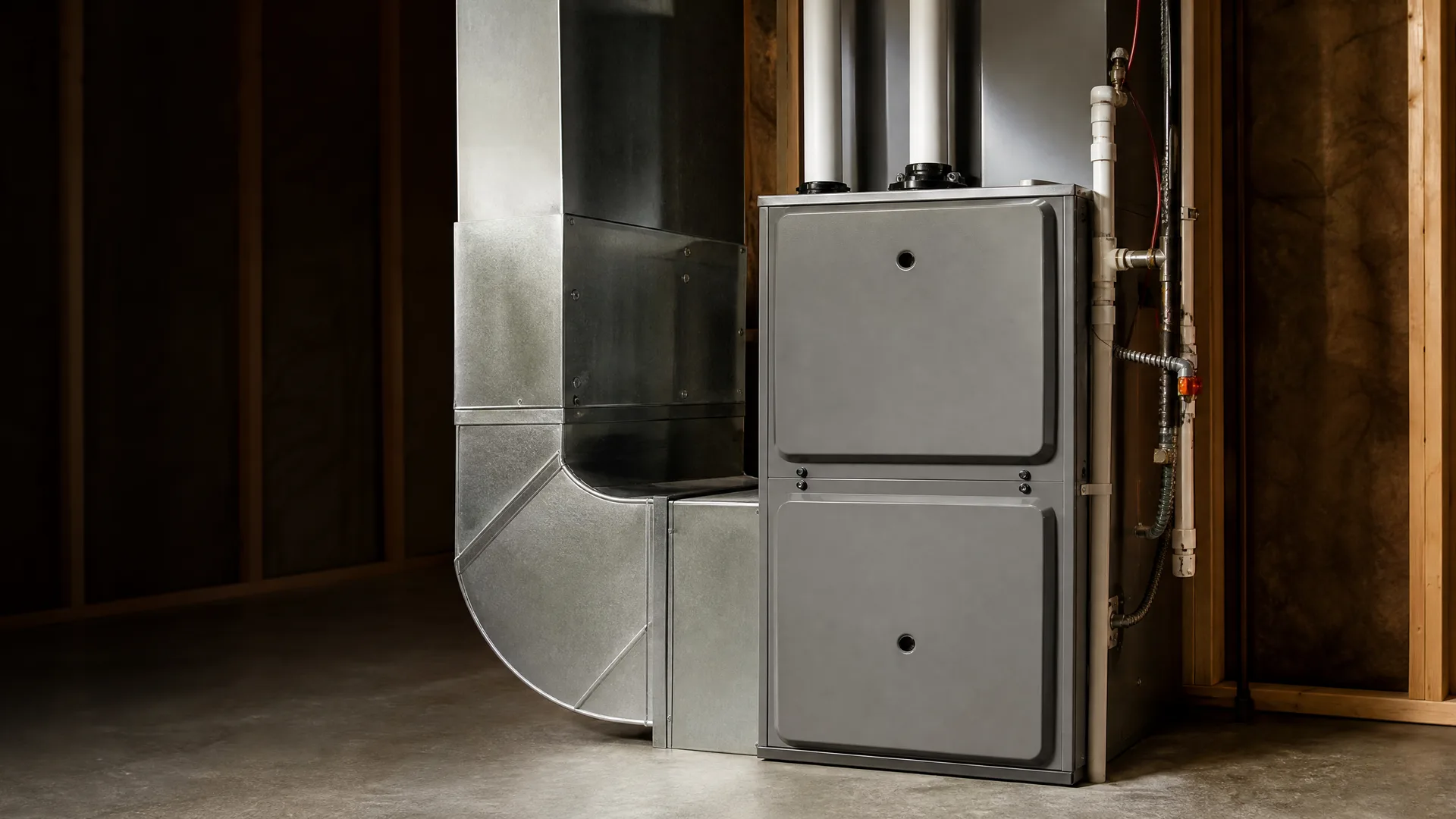
A gray high-efficiency furnace with two PVC vent pipes stands in an unfinished basement beside sheet-metal ductwork, a framed and plastic-covered wall, and a bare concrete wall with vertical pipes.

Sized right, it runs steady

A furnace that matches your house warms evenly and shuts off when the house is satisfied. You won't feel cold rooms upstairs or short cycling at the thermostat. The ductwork and venting carry what the furnace puts out without strain.

A gray furnace cabinet in a basement, connected to galvanized sheet-metal ductwork and white PVC pipes, against a concrete wall with exposed metal piping and insulation overhead.

Sized wrong, it shows

An oversized or undersized furnace fights your house instead of matching it. It cycles on and off too fast, or it runs long stretches without catching up. Either way, with power costs what they are in Vermont, that shows up on the bill.

Oversized vs. Undersized

Oversized

  • It heats the house fast, then shuts off before the ductwork finishes carrying that heat to the far rooms.
  • Short cycling like this wears the ignition system and the blower motor faster than steady, longer runs do.
  • The air coming out feels hot in blasts instead of steady, and the thermostat swings instead of holding.
  • Vermont winters push a furnace hard, so a unit that's cycling on and off constantly doesn't get a break, it gets more starts and stops.
  • Oil costs more here when a furnace is burning fuel in short bursts rather than running an efficient steady cycle.

Undersized

  • It runs nearly nonstop on the coldest days and still can't bring the house up to temperature.
  • Rooms farthest from the furnace stay noticeably cooler than rooms close to it.
  • The blower motor runs for hours at a stretch, which adds up on an electric bill that's already among the highest in the country.
  • On a sub-zero night it may run the whole night through without ever satisfying the thermostat.
  • Parts wear from constant long runtime instead of normal cycling, which shortens how long the furnace lasts.
A gray-haired bearded man in a dark knit sweater sits on a light gray sofa in a sunlit living room, looking to his left, with a framed artwork, a potted palm, and a curtained glass door behind him.
A middle-aged man in a dark green sweater sits on a light grey sofa looking toward a sunlit window, with a wooden shelving unit, lamp and potted plants in the background.
A man in a dark green sweater sits on a light grey sofa in a sunlit living room, looking to his left, with a shelving unit, houseplants, framed art and a large window behind him.
A gray-haired bearded man in a dark green sweater sits on a light gray sofa in a sunlit living room with a potted plant, framed picture, and dark shelving in the background.

Why does one room never get warm enough

If a furnace is the wrong size, you feel it in the house. Rooms farthest from the furnace stay cold while the thermostat says you're warm enough. The furnace clicks on and off every few minutes instead of running a steady stretch. You hear it kick on, then notice it's quiet again before the house actually feels different. If yours still runs on oil, you may notice the tank getting refilled more often than it used to. With power rates what they are in Vermont, a furnace working harder than it should to heat your house shows up on the bill, and a blower or igniter cycling that often wears out well before it should.

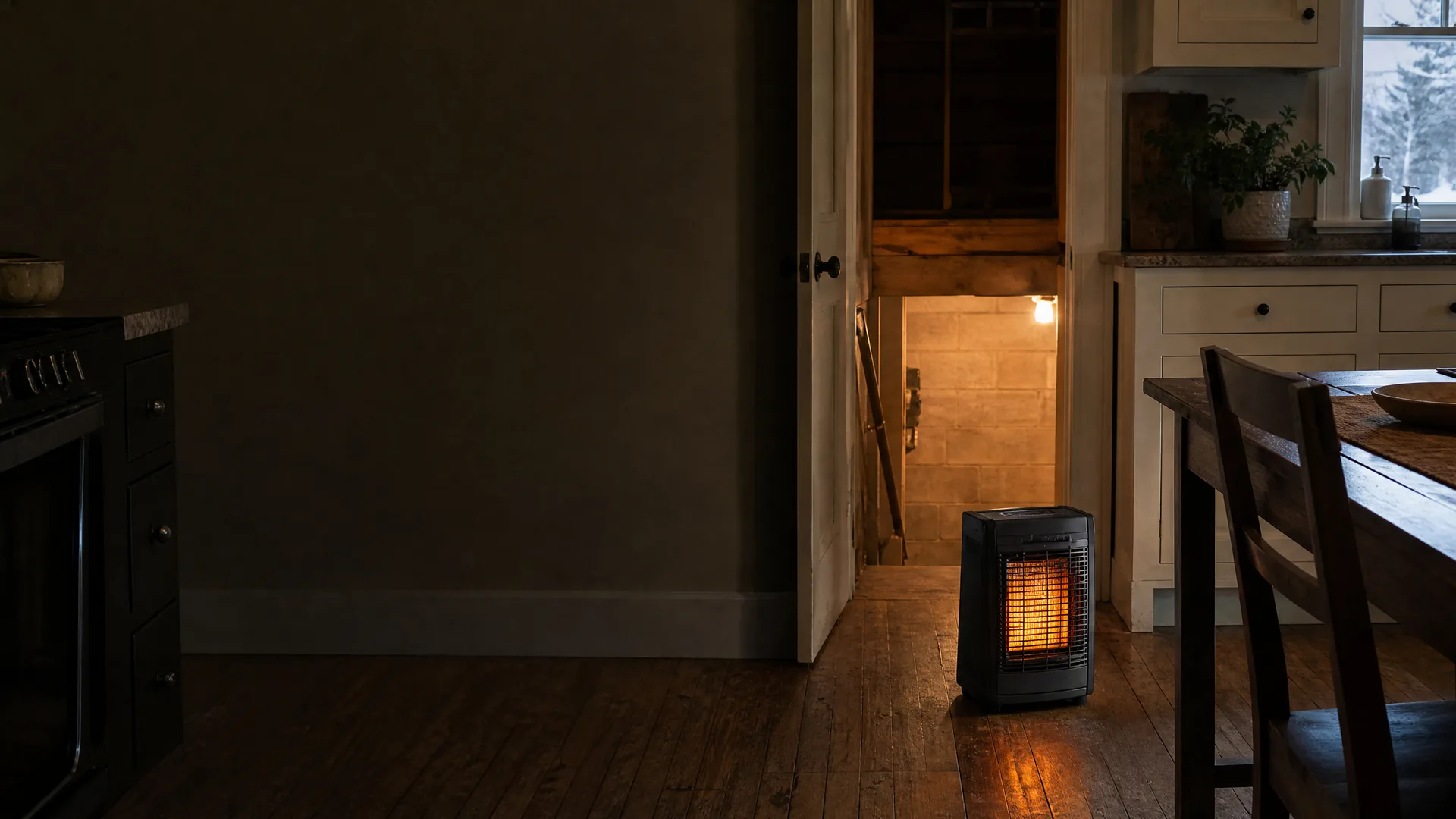
A dimly lit interior with wood plank flooring where a small portable heater with a glowing orange element sits near an open doorway, with a stove at left, kitchen cabinets and a potted plant at right, and a wooden table and chair in the foreground.

The thermostat read sixty-eight, same as always, but your feet on the kitchen floor said otherwise. Six-thirty, still dark out, frost on the inside corner of the window. You went down and found the space heater, the one from the mudroom, and set it glowing by the table so the kids could eat breakfast without their coats on. Left the basement door open behind it, the way you do when the furnace is working too hard to keep up and you want some of that warmth climbing the stairs instead of sitting down there with the oil tank. Vermont mornings like this, late winter, the cold sits in a house like this and finds every room the furnace can't quite reach.


One request and it's handed off

Getting the size right matters more when a house runs on oil, because the wrong size doesn't just waste fuel, it wastes fuel that costs more here than in most of the country. A furnace too big for your house burns through oil fast, cycling on and off before it ever warms the far end of the hall. One too small runs long stretches just trying to keep up through a Vermont winter, and the tank empties faster for it. Figuring the right size means knowing your house, its insulation, its layout, the ductwork or pipes already in place, not guessing from the unit that's currently in the basement. That's a job for someone who installs furnaces in homes like yours every winter and knows what oil systems here actually need. Send the form and a local contractor who does this work gets it, not a handful of companies competing for your number. Once it's sent, finding the right size furnace for your house stops being something you have to figure out alone.

How a contractor sizes it

Getting the size right takes more than measuring square footage. A contractor who installs furnaces in Vermont homes all season does a load calculation, checking your insulation, your windows, your ceiling height, and how much wall faces the wind. Two houses the same size can need different furnaces depending on what's between the walls. That's the kind of thing you can't eyeball from a chart, and why the install should go to someone who does this work regularly in your area, not whoever's available fastest. Get this part wrong and the rest of the job, the ductwork, the venting, the thermostat settings, is built around the wrong number.

What the old furnace tells you

If your current furnace came with the house, its size isn't proof it was ever right. Builders and past owners sometimes sized for the largest room or picked whatever unit was on hand, not what the whole house actually needs. A furnace that's run fine for years can still be the wrong size, just one that's been compensating with longer runtimes or a thermostat set higher than it should need to be. The nameplate on the old unit is a data point worth handing to whoever does the new load calculation, not a number to copy onto the replacement.

A woman with shoulder-length graying brown hair in a cream knit cardigan sits in a dark armchair indoors, looking off to the side with a slight smile, with a shelf, window and houseplant blurred behind her.
A woman with dark hair in a bun sits wrapped in a chunky knit blanket on a couch with a child resting his head on her shoulder, eyes closed, beside a lit lamp and bookshelf indoors.

Have your old furnace's size on hand

If you know the tonnage or BTU rating of the furnace you have now, a contractor can check it against your house instead of guessing where to start.

Find a licensed furnace pro

Not sure what you have

That's fine too. A contractor doing a proper load calculation isn't relying on the old number anyway, just on your house as it stands now.

Find a licensed furnace pro

Winter nights average 12°F statewide

Twelve degrees is a normal night here from December through February, not a cold snap. A furnace sized right for your house has to recover fast from that every morning and hold steady through it, without the far rooms losing ground while it does.

NOAA nClimDiv 1991-2020 county normals weighted by homes

A gray furnace cabinet in a basement with sheet-metal ductwork, white PVC vent pipes, and black gas piping against a concrete wall and wood-framed partition on a bare concrete floor.
This furnace is sized to the house, running steady with clean metal and no strain on the connections.
A gray metal furnace with two white PVC vent pipes stands on a concrete floor beside galvanized sheet-metal ductwork in a basement or utility space with wood framing.
Rust like this on an aging furnace is often a sign it's been working harder than it should for a house this size.
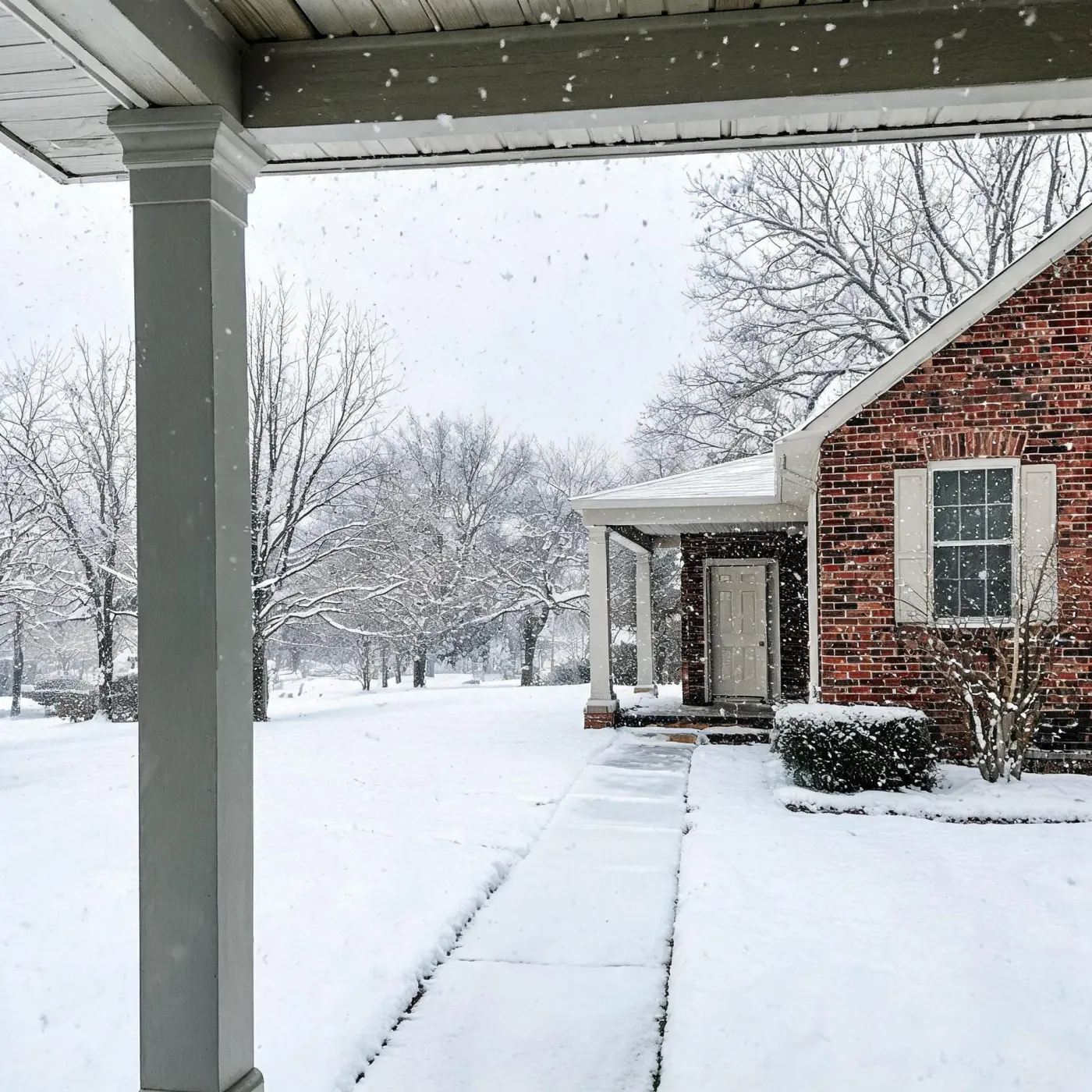
View from under a covered porch with a white column toward a brick house with a white front door and shuttered window, with snow falling and covering the lawn, walkway, shrubs, and bare trees.

12°F is about what the thermometer shows on a winter night across Vermont, according to NOAA climate normals. That's the temperature your furnace is working against for hours at a stretch, not just at the coldest point before dawn. A furnace sized right for your house pulls the indoor temperature back up before the house loses too much ground, and holds it there till morning. One sized wrong either runs flat out most of the night trying to keep up, or cycles on and off and never quite gets the far rooms caught up. You'd notice it as a chill that sets into the house by morning, even with the thermostat set the same as always.

NOAA nClimDiv 1991-2020 county normals weighted by homes

An older metal furnace with a louvered front panel stands against a concrete basement wall, connected to sheet-metal ductwork and a flue pipe, with copper and steel pipes running alongside.
Before you get your furnace installation
A beige high-efficiency furnace stands on a concrete basement floor beside sheet-metal ductwork, with white PVC vent pipes and a gas line running along an insulated wood-framed wall.
After you get your furnace installation
A gray high-efficiency furnace with white PVC vent pipes stands on a concrete pad in a basement, beside sheet-metal ductwork, copper piping and a poured concrete wall with wood framing at left.

A furnace holding steady

This is what a furnace looks like when the size is right. It sits on its pad running at a steady pace, the metal clean, the connections tight. Nothing about it is straining to keep up, because it was never asked to work past what the house actually needs.

A beige gas furnace in a basement with a metal flue pipe, galvanized sheet-metal ductwork to its left, and gas and water pipes along the concrete wall to its right.

A furnace under strain

An older furnace working too hard for the house it's in shows it over time. The flue and the pipes around it take on wear from a unit that's been cycling harder than it should. By the time you notice it, the strain has usually been there for a while.

The right size furnace for your house comes from a load calculation, not a guess based on the one you're replacing. Get that number right and the house heats evenly, the oil bill reflects what your house actually needs, and the furnace isn't fighting itself every winter morning. A contractor who installs furnaces in Vermont homes all season, through the twelve-degree nights and everything colder, knows what sizing mistakes look like in a house like yours and how to avoid repeating them. You'll be connected with one local contractor for this, not a handful of companies calling at once, so the person who shows up is the one who does the work and stands behind it. Once you send the request, the search is off your plate. You've read what matters. The next step is putting the number to your house.

A gray high-efficiency furnace with two white PVC vent pipes stands in an unfinished basement beside galvanized sheet-metal ductwork, with insulated wood-framed walls and piping behind it.

It's off your list after this

Step 1 of 3: Equipment