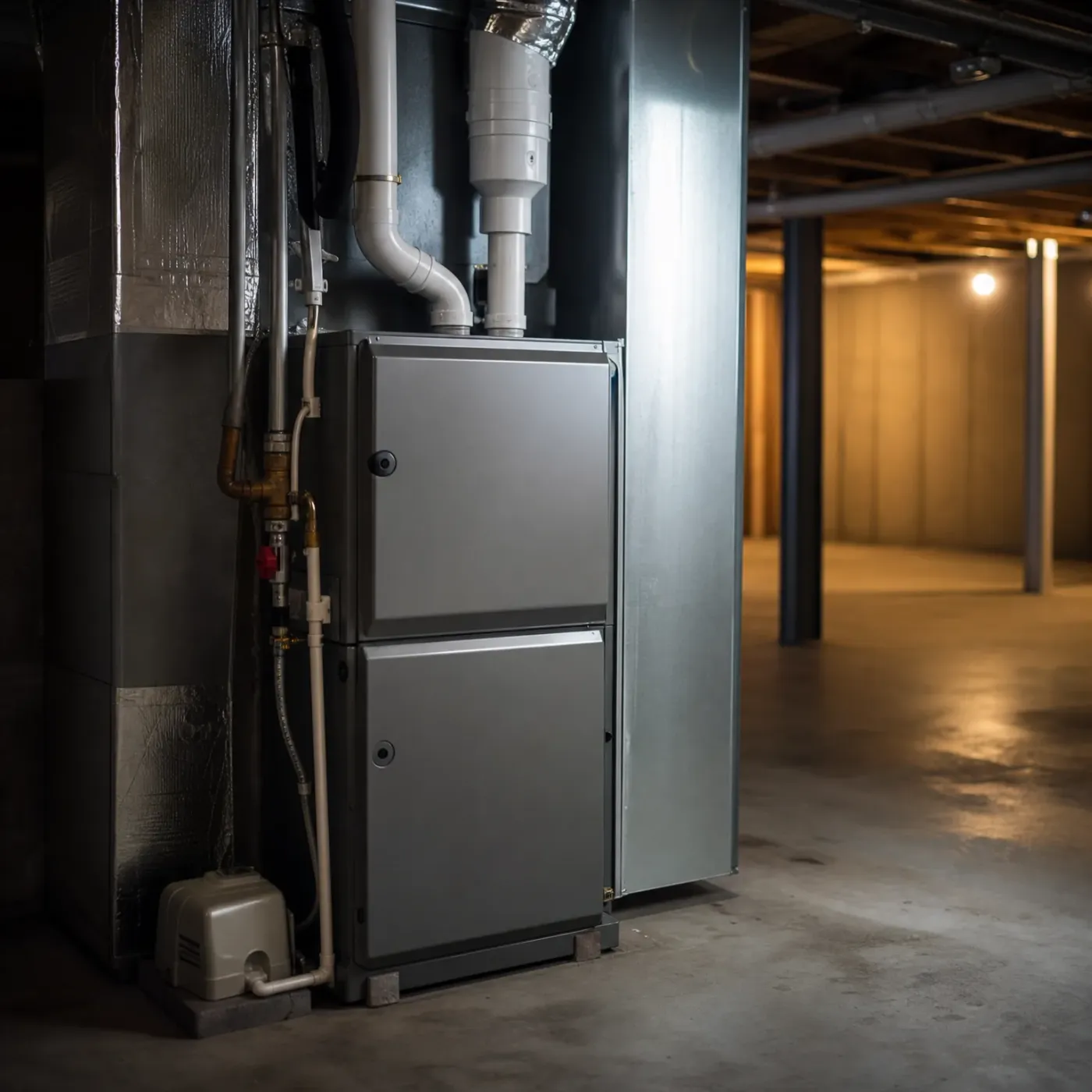






A gray high-efficiency furnace with PVC venting, copper and plastic piping, and a condensate pump sits beside sheet-metal ductwork in a concrete-floored basement.

Get your furnace to the right pro

What temperature to set the heat in a Vermont winter

68 degrees is the number most people throw around, but the right setting for your house depends on your furnace, your oil use, and how the place holds heat once it's up to temperature. This page gets into what actually makes sense for a Vermont winter. If you want a local contractor to look at your furnace before the cold really sets in, you can get matched with one here.

Find my pro

Most Vermont homes do well with the thermostat set between 68 and 70 degrees during the day, then down to 60 to 62 at night or when nobody's home. That range keeps a furnace running in steady, moderate cycles instead of struggling to recover from a cold house, which is what drives oil use up. Every degree lower on the thermostat saves on fuel, but push it too low and the furnace has to work harder to bring the house back up, especially once outdoor temperatures drop into the teens and single digits, which happens for months here. The right number for your house also depends on how well it holds heat once it's warm. A newer furnace in a well insulated house can hold 68 comfortably on less fuel than an older one in a drafty house set to the same number. If your oil bills feel high no matter where you set the thermostat, that's usually a sign the furnace itself needs a look, not the setting.

A gray high-efficiency furnace in a basement, connected to sheet-metal ductwork on the left and white PVC vent pipes above, with black gas and drain piping and an exposed wood-stud wall with OSB sheathing on the right.
A furnace running in steady cycles keeps the flue and burner clean, so it fires reliably even on the coldest nights.
An older gas furnace with two louvered front panels stands on a concrete basement floor beside galvanized sheet-metal ductwork, pipes, and a weathered concrete wall.
A furnace left to swing between a cold house and a hard recovery wears its igniter and heat exchanger faster.

When the thermostat calls for heat, the burner ignites first. The heat exchanger has to come up to temperature before the blower kicks on, so no cold air gets pushed into the house. That short delay is normal. What costs you oil is how often that burner has to start from cold. Every ignition draws more fuel than the minutes of steady running that follow it, so a furnace that cycles on and off all night uses more oil than one running fewer, longer bursts. This is why a deep nighttime setback can work against you. Drop the house too far and the furnace has to recover hard, stacking up burner starts to get back to temperature. A thermostat with a wider swing setting lets the room drift a degree or two more before calling for heat again, trading a few more minutes of cool air for fewer total cycles. On an oil system, the aquastat is doing its own quiet work too, holding the boiler water or heat exchanger at a minimum temperature regardless of what the thermostat is asking for.

How a furnace actually cycles

  • A furnace fires because the thermostat calls for heat, then the burner ignites and warms the heat exchanger before the blower turns on.
  • The blower waits a short delay after ignition so it only pushes air once the heat exchanger is actually hot, not cool air.
  • Oil furnaces cycle in bursts, and every burner start draws more oil than the steady minutes that follow it.
  • Setting the thermostat back more than a few degrees at night means the furnace has to run long and hard to recover, which adds extra burner cycles.
  • A thermostat with a wide swing setting lets room temperature drift further before the furnace kicks on, which means fewer but longer burner runs.
  • The aquastat on an oil furnace keeps the boiler water or heat exchanger at a minimum temperature even when the thermostat isn't calling for heat.
A gray-haired, bearded man in a dark coat dusted with snow stands smiling in a dimly lit room with a lamp, mirror, framed art, and a sofa in the background.
An older man with white hair and a beard, wearing a dark snow-dusted coat and scarf, stands in a warmly lit interior hallway with a framed landscape picture, a table lamp and a potted plant behind him, and a snowy view through a window at left.
An older man in a dark snow-flecked overcoat and scarf stands smiling in a warmly lit home entryway, with a glass-paned door showing darkness outside and a lamp-lit room visible through a doorway behind him.
An older man with gray hair and a beard, wearing a dark snow-dusted jacket and scarf, stands smiling in a warmly lit interior hallway with a lit table lamp, a vase of dried branches, and a framed picture in the background.

What a Setback Costs Your House

  • A thermostat left at 68 all night still burns oil on every call, even with nobody up to feel it.
  • Setting back to 60 while you sleep can shave real gallons off a winter's oil delivery without the house ever feeling cold.
  • Dropping the setting past 58 or so invites pipes near outside walls to get cold enough to worry about.
  • A furnace short-cycled by a thermostat bouncing between setbacks and quick recoveries wears its igniter out faster than one running steady.
  • If a room stays noticeably colder than the rest of the house no matter the setting, that's usually a duct or airflow problem, not the thermostat.
  • Oil prices here mean a couple of degrees held all winter adds up more than they would somewhere heating with gas.

Setting the thermostat back at night is the easiest way to cut oil use, but where you stop matters as much as whether you do it. Most Vermont houses sit fine at 60 overnight. The furnace idles, the oil truck comes a little less often, and nothing in the house suffers for it. Push the setback past 58 and you're no longer just saving oil, you're asking the building to get cold enough that water in pipes along an outside wall can start to matter, especially on a night when it's well below zero outdoors. That's a different kind of risk than a chilly room in the morning.

The recovery matters too. A furnace that drops to 60 and climbs back to 68 every morning is working harder on that climb than one holding a steady 65 all day, and asking it to do that twice a day for months is asking more of the igniter and the heat exchanger than a gentler setback would. If one room never seems to catch up to the rest of the house regardless of where the thermostat sits, that's worth mentioning to whoever services the furnace. It's rarely the thermostat's fault. It's usually a duct run or a register not pulling its share of air, and no setting fixes that.

With oil priced the way it is here, the difference between 68 and 70 held all winter shows up on the delivery bill in a way it wouldn't with cheaper fuel.

Winter nights average 12°F statewide

A 12 degree night is normal here, not a cold snap. Your furnace is built to run long, steady cycles to hold 68 against that kind of cold, and it can do that for years without strain if it's kept up. Skipped maintenance is what turns an ordinary Vermont night into a hard night for the furnace.

NOAA nClimDiv 1991-2020 county normals weighted by homes

Why the setback actually saves oil

An oil furnace burns fuel to replace the heat a house loses, and heat loss depends on how far the indoor temperature sits above the outdoor temperature. Drop the house from 68 to 60 overnight and that gap shrinks for eight hours straight, so less oil goes through the nozzle during that stretch. Pushing it back up in the morning costs some oil back, but not as much as was saved holding 68 all night. The bigger the setback and the longer it holds, the more that math favors the lower number, which is why 60 to 62 is where most Vermont households land.


What a cold restart asks of the furnace

When the thermostat calls for heat after a long setback, the burner has more ground to cover before the house reaches 68 again. That means a longer burn, more oil moving through the nozzle in one stretch, and more heat passing through the exchanger in a single cycle. None of that harms a furnace that's maintained, but a dirty nozzle or a weak igniter has less margin on a hard recovery than on a short, routine cycle. A furnace that's been serviced handles the long pull from 60 to 68 the same way it handles any other call for heat.

A gray sheet-metal furnace with flue pipe and adjacent ductwork stands against a stone basement wall on a concrete floor, with white PVC and metal pipes running nearby.
Before you get your furnace maintenance
A gray high-efficiency furnace with white PVC vent pipes stands against a concrete basement wall beside sheet-metal ductwork, a small condensate pump on the floor, and exposed wood framing at left.
After you get your furnace maintenance

The right pro for this job

A furnace that short-cycles or struggles to recover from a deep setback is usually telling you something about its condition, not just its settings. A dirty burner or a weak igniter makes the furnace work harder to hit 68 after a night at 60, and that shows up as longer run times and higher oil use than the setback should cost you. Maintenance is what keeps the recovery quick and the cycles steady, which is the whole reason the setback works in the first place. A local contractor who services furnaces through Vermont winters knows what an oil burner this age usually needs before it fails, and checking in with one contractor instead of several means you're not fielding calls from companies who've never seen your furnace. With power costs here among the highest in the country and oil already the main expense, getting the furnace looked at before the cold settles in is worth more than guessing at a thermostat number.

A gray gas furnace stands on a concrete basement floor, connected to sheet-metal ductwork, white PVC vent pipes, and a yellow gas line, with plastic sheeting covering the walls.

Furnace running clean

A furnace like this fires right up and holds its temperature without a fight. The burner lights clean, the heat exchanger comes up to temperature fast, and the blower moves warm air through the ducts without strain. That's what steady maintenance and steady thermostat settings get you.

A metal furnace with louvered panels stands against a concrete basement wall, connected to sheet-metal ductwork and a round flue pipe, with wooden framing posts and a pipe nearby.

Furnace showing its age

Dust on the burner and a gas line this old usually mean a furnace that struggles more than it should. It takes longer to recover from a cold house, runs longer than it needs to, and burns more oil doing it. A furnace in this shape is overdue for someone to look it over.

Programmed Setback or Manual Setback

Thermostat you program

  • A programmable or smart thermostat drops the house to 60 or 62 at the same time every night without anyone touching a dial.
  • It brings the house back to 68 before the first alarm goes off, so the recovery happens while the house is still empty.
  • The furnace sees the same two setpoints every day, which is the steady pattern an oil furnace handles best over a winter.
  • You can see the schedule is working without checking on it, since the setback happens whether you remember or not.
  • A missed manual setback some nights means some nights you're paying for 68 degrees at 2 a.m. for no reason.

Thermostat you set by hand

  • A manual thermostat only drops to 60 if someone actually walks over and turns it down before bed.
  • On a night you forget, or you're out late, the furnace holds 68 all night and burns oil it didn't need to.
  • There's no wrong way to use the dial itself, but there's no system catching the nights it doesn't get touched.
  • Waking up and bumping it back to 68 by hand means the furnace starts its recovery later than it could have.
  • It works fine for a household that's consistent about it, but one missed night undoes part of what the setback was for.
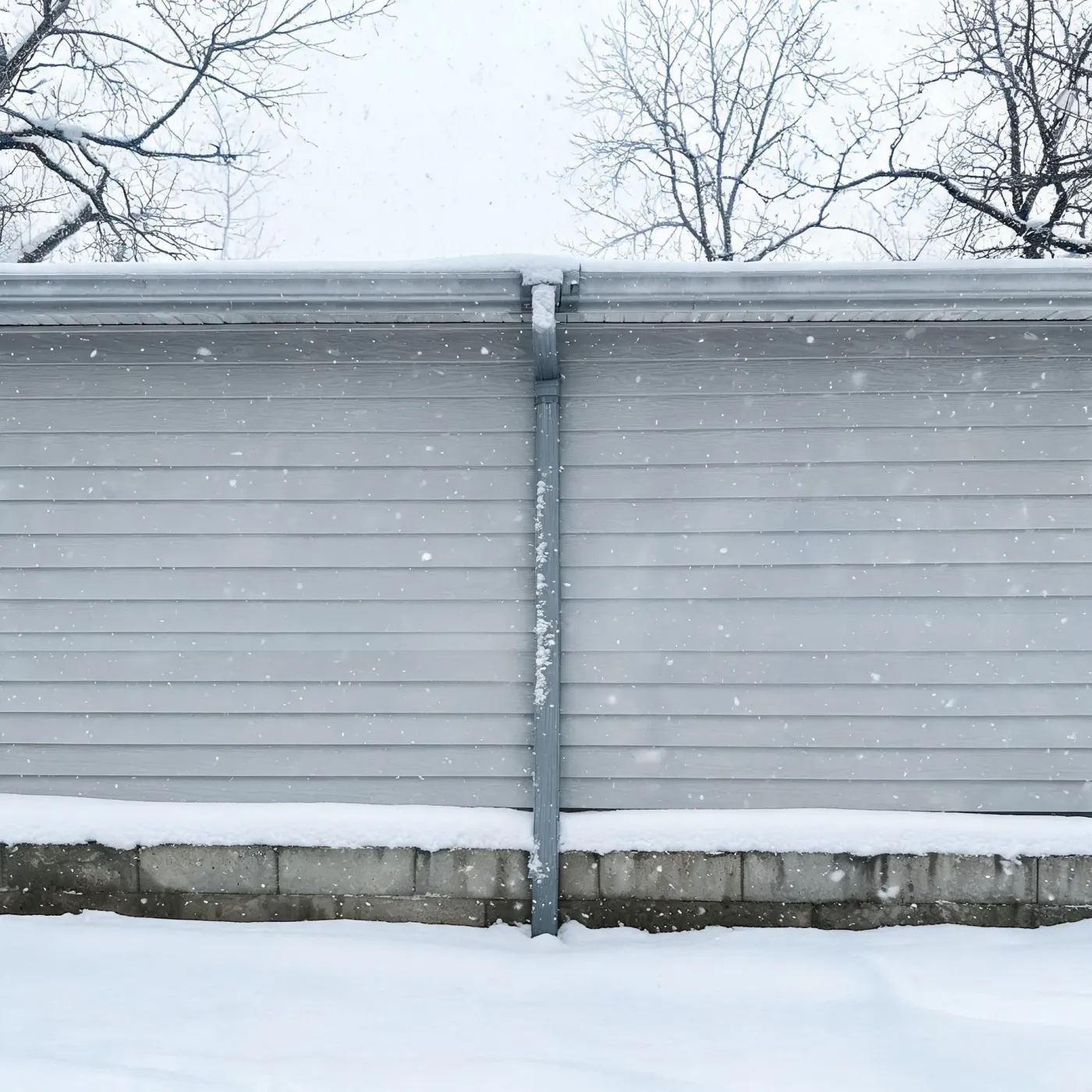
Exterior wall of a building with gray horizontal siding, a metal downspout at center, and a concrete block foundation, with snow on the roof edge, ledge, and ground, and bare trees against an overcast sky during falling snow.

Statewide, winter nights average 12°F, according to NOAA climate data for Vermont. That's the air pressing against your walls and windows for eight or nine hours straight while the thermostat sits at its lowest setting. Your furnace answers with long burner cycles to hold the house wherever you've set it, and at that kind of cold, it's running close to its limit most of the night, not coasting. A furnace that's been cleaned and adjusted handles that steadily, year after year. One that hasn't starts showing it on nights like these first, with longer cycles, a burner that struggles to catch, or a house that never quite climbs back to 68 by morning.

NOAA nClimDiv 1991-2020 county normals weighted by homes

A woman stands in the open black front door of a white-sided house with a dark shingled roof while a man in a navy jacket approaches along the walkway, with lantern wall lights, a potted shrub, and flowering garden beds nearby.

68 during the day, 60 at night, and a furnace that can actually hold it

That's the answer. 68 to 70 while you're up and around, 60 to 62 once you're asleep or out of the house. The savings come from the setback, and the comfort comes from a furnace that recovers without a fight.

Whether yours does that depends on what shape it's in, not just where the dial sits. A furnace that's been looked at every year handles a 12 degree night the same way it did five years ago. One that hasn't will start answering the setback with longer runs and harder starts, and that shows up in the oil tank before it shows up anywhere else. A local contractor who services furnaces like yours all winter can tell you which one you've got, and if a match connects you with someone, it's one contractor who works this equipment every season, not a handful of calls to sort through.

A dark ceramic mug on a round wooden table beside a light grey sofa with a woven cushion and knit throw, with a window, potted plant, floor lamp and wooden cabinet blurred in the background.
At dusk, a dark board-and-batten house with a standing-seam metal roof and lit entry walkway of stone pavers, with two large outdoor heat pump units on a stone-walled pad at right and trees and hills in the background.

Furnace Maintenance

Matched to your furnace job

Step 1 of 3: Equipment
  • A corner of a room with an upholstered wood-framed armchair holding a floral pillow, a round side table with a ceramic lamp, books and a vase of greenery, a framed landscape painting on the wall, a patterned rug, and a sunlit multi-pane window.
    • A local pro who knows furnaces gets your details and gets in touch.
    • Describe your furnace job, and a local pro who handles it gets in touch.
  • Interior corner with a wood-framed window showing green foliage outside, a framed landscape print on a beige wall, and a rounded stone vase of leafy branches on a wooden cabinet.
    • Send the form, and lining up the furnace tune-up stops being yours to chase.
    • Send the form and the furnace tune-up stops being something to remember.
  • A pale ceramic vase holding olive branches sits on a dark wooden countertop beside a carved wooden dough bowl, next to a wood-framed window and a light painted plank wall.
    • Fill out one form instead of calling around for a furnace tune-up.
    • Skip calling around to set up a furnace tune-up.
  • A dark wood round side table holding a brass lamp with a cream shade, a blue-and-white patterned bowl, and a white textured pot of greenery, beside an upholstered chair with a gray patterned cushion and a white-framed window showing green trees and flowering shrubs.
    • Only one pro gets your request, so you hear from one company.
    • Your request stays with one local pro.