Profile view of a bearded man wearing a dark baseball cap and a dark gray T-shirt against a plain off-white background.

Why your furnace is leaking water in Vermont

Step 1 of 3: Equipment

Why is my furnace leaking water?

You've gone down to check on the furnace and found water pooled underneath it or dripping from a line. With most Vermont homes heating with oil and winter not letting up for months, a furnace that's not working right is not something you can wait out, especially with people counting on you to keep the house warm.

Most likely it's condensation or a cracked heat exchanger, and the second one means shut it off

If your furnace is a newer high-efficiency model, the water is probably condensation from the exhaust, and a clogged condensate line or a cracked drain trap is usually why it's pooling instead of draining away. That's a repair, not an emergency. But if the water shows up with rust streaks, a sour smell, or the furnace is an older oil-fired unit, the cause may be a cracked heat exchanger or a leak in the flue. That's worth shutting the furnace down for until someone looks at it, since a damaged heat exchanger can let exhaust into the house. Either way, the leak won't fix itself, and Vermont winters don't leave much room to let it sit.

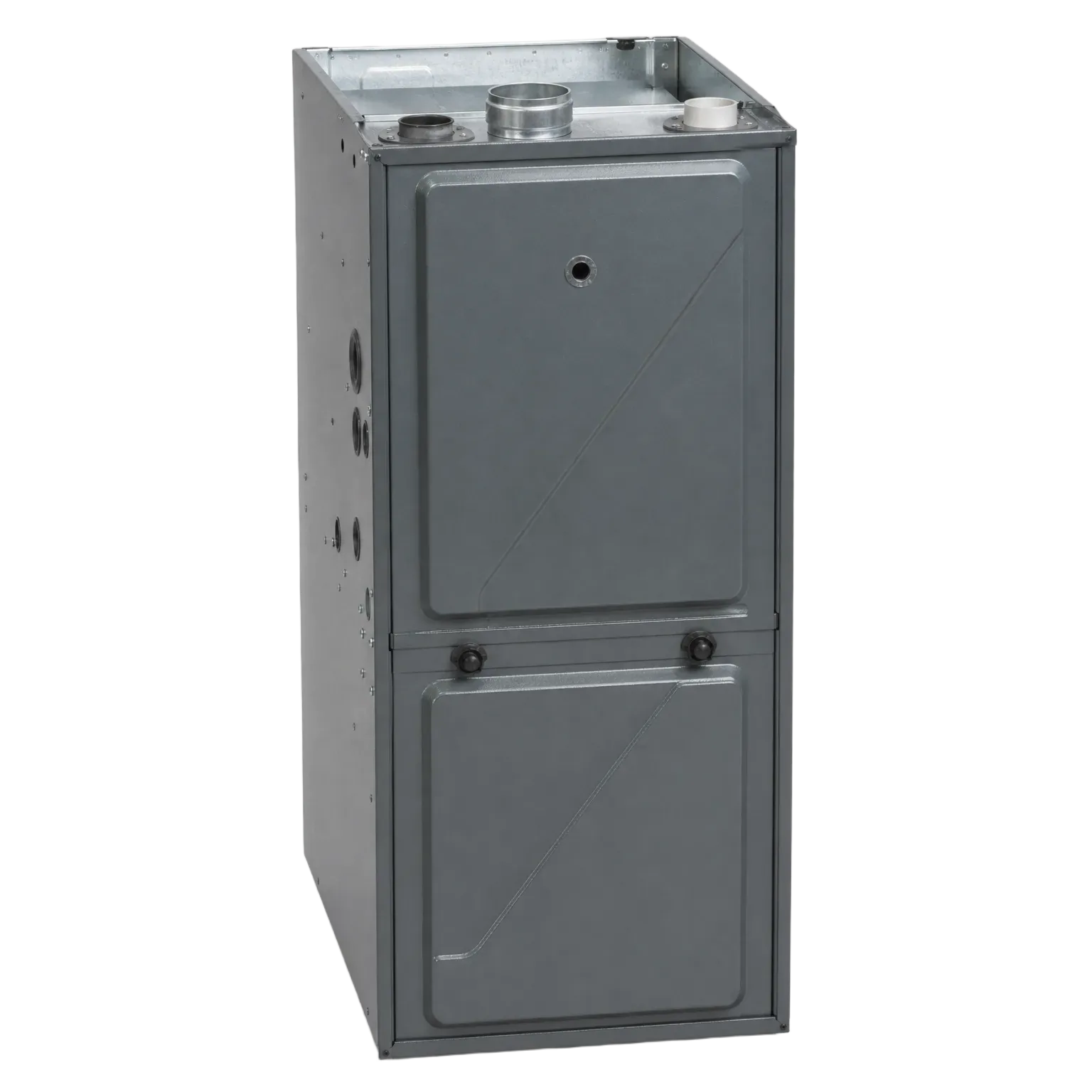
A gray high-efficiency furnace in a basement with white PVC vent pipes, sheet-metal ductwork, copper and black piping, a condensate pump, and insulated walls above a concrete floor.

Condensate Draining Right

A high-efficiency furnace burns gas cool enough to pull water out of the exhaust, and that water needs somewhere to go. It should run down the PVC line into the condensate pump and out, with the trap staying clear and the pump kicking on when it fills. No pooling, no drips, no trouble.


A beige residential furnace stands on a concrete basement floor beside galvanized sheet-metal ductwork, a round flue pipe, copper gas piping, and a PVC condensate line, with a wood-paneled wall at right.

Water With Nowhere to Go

An older furnace like this one isn't built to handle condensate the same way, so a leak usually means something else is wrong. A cracked heat exchanger, a clogged flue, or a drain line that's backed up can all send water where it doesn't belong. Left alone, it reaches the floor and the panels around it.

Is this water going to turn into a bigger problem?

A puddle under the furnace doesn't stay small. Left alone, it rusts out the burner compartment and the heat exchanger, and that's a repair that costs a lot more than clearing a clogged line. You might notice a musty smell near the furnace, or a water stain spreading across the floor underneath it. If the furnace has a safety switch for this, it may just shut the whole system down rather than keep running with water backing up, and you'll find out when the house starts getting cold. With a Vermont winter ahead, a furnace that won't stay on is the kind of thing that needs looking at before it decides for you.

A woman with long light-brown hair in a gray knit sweater sits in a living room looking off to the side, with a sectional sofa, houseplant, lamp, wooden table and large windows behind her.
A woman in a chunky gray turtleneck sweater sits indoors looking off to the side, with a blurred dining table, chairs, pendant lamp and window behind her.
A woman in a cream knit sweater with her hair in a bun stands near a window, looking off to the side, with a gray sofa, houseplant and open kitchen with pendant lights blurred behind her.
A woman with long brown hair in a cream knit sweater stands near a window, looking to the side, with a white sofa, shelving, and a hallway visible behind her.

Hand off the furnace problem

Your request goes to one pro, not a list of companies.

There's no charge for the request.

Oil Furnaces Leak a Different Way

Most furnaces in Vermont run on oil, and oil furnaces don't make condensate the way a high-efficiency gas furnace does. If yours is leaking, the water is more likely coming from the humidifier attached to the ductwork, a cracked heat exchanger letting flue gas condense, or a supply line and fitting nearby that's actually dripping down onto the furnace. The oil burner itself doesn't produce water as part of normal operation. A tech who works on oil systems all winter knows to check the humidifier saddle valve and the heat exchanger seams first, because those are the usual sources, not the burner assembly.

A Day Without Heat Costs More Here

Vermont winters run long, and the power here is some of the most expensive in the country, so a furnace down for parts or guesswork gets expensive fast in ways beyond the repair bill. Electric space heaters pull hard on a system already paying premium rates, and running them for days adds up. A local contractor who's already seen this failure on other furnaces nearby can usually tell what's wrong by how the water shows up, where it pools, and when it starts, which means fewer visits and less time without heat while it's cold out.

Winter nights average 12°F statewide

At 12°F on a typical winter night, your furnace is running most of the night to keep up. That's a lot of hours for a cracked humidifier line, a clogged condensate trap, or a tired pump to keep leaking before anyone notices.

NOAA nClimDiv 1991-2020 county normals weighted by homes

Find the Leak, Call It Fixed

  • Water under the furnace always has a specific source, whether it's a condensate line, a humidifier, or a flue problem, and that source can be found and fixed.
  • An oil furnace leaking water is almost never a condensate issue, since the leak points toward the humidifier, a flue, or a drain line instead.
  • Left alone, the leak reaches the burner compartment or the heat exchanger, which turns a small fix into a much bigger one.
  • A technician who works on Vermont furnaces all winter has already seen this exact leak dozens of times this season.
  • Your request goes to one licensed contractor local to your area, not a list of companies competing for the call.
  • That contractor already knows which part tends to fail first in oil furnaces running through a Vermont winter.

The water under your furnace has a reason behind it, and that reason has a fix. Most homes in Vermont run on oil, so the leak is rarely a condensate problem the way it would be with a gas furnace. More often it traces back to the humidifier line, a flue that's venting wrong, or a drain that's stopped draining. Whatever it is, it doesn't fix itself, and it doesn't stay small. Left running, that water works its way into the burner compartment or the heat exchanger, and at that point you're not looking at a cleared line anymore. You're looking at a part replaced or a furnace replaced, in the middle of a Vermont winter, with the heat off while it happens.

That's the part worth getting ahead of. Your request goes to one licensed contractor working near you, not a batch of companies calling you back at once. Someone who services furnaces through a Vermont winter has already traced this exact leak more than once this season. They know an oil furnace's leak almost never means condensate, so they're not chasing the wrong part first. They know which line cracks, which trap clogs, which pump gives out after running most of a cold night. That's less time spent figuring out what's wrong and more time spent fixing it, with the heat back on and the water gone from under the furnace for good.

Sunlit corner of a room with a wooden sideboard holding a ceramic vase of olive branches and a dark wooden bowl, beside a white-framed window, a hardwood floor and woven rug.
A wooden cabinet holding a pale ceramic vase with leafy branches stands beside a beige wall in a sunlit room with hardwood floors, a jute rug, and a window showing green foliage outside.
Sunlit room corner with a beige upholstered sofa holding a rust-brown cushion, beside floor-length linen curtains at a window, over a wood floor with a woven rug.
Corner of a room with beige walls, a framed photograph, a floor-length linen curtain beside a window, an upholstered armchair with a knit pillow, white baseboards and trim, wood flooring and a pale rug.
Sunlit living room corner with a beige upholstered armchair with a cushion, linen curtains beside a wooden-framed window, green vertical panelled wall with a framed print, and a wooden table edge over a woven rug.

Send one request and you're done looking

The pro who reaches out is licensed in Vermont.

Find a local pro

You only hire the pro if you want to.