Why your furnace smells like burning in Vermont
A burning smell from your furnace almost always means dust burning off the heat exchanger, and that's normal for the first hour after you start it up for the season. If it keeps smelling that way, or the smell is sharper, like melting plastic or hot metal, something inside is overheating. Most Vermont homes heat with oil, and an oil furnace that smells like burning can mean a cracked heat exchanger, a dirty filter choking airflow, or a clogged burner nozzle not combusting fuel cleanly. A failing blower motor will also run hot and give off that smell, especially if it's been straining to push air through blocked ducts or a dirty filter. None of these fix themselves, and running a furnace with a cracked heat exchanger risks carbon monoxide getting into your air. With oil heat and cold winters here, you need this working right, not patched. Someone who services furnaces in Vermont every winter will know from the smell alone what's likely wrong before they even open the cabinet.




Why does my furnace smell like it's burning oil?
Your oil furnace kicks on and you catch a sharp, almost sooty smell, not the dusty smell of a furnace starting up for the season. In Vermont, where most homes heat with oil, that smell means something specific is happening at the burner, and it's worth knowing what before you decide whether to shut the system down.
It usually means the burner isn't combusting the oil cleanly
An oil furnace sprays fuel into the combustion chamber and ignites it there. When that burn is incomplete, unburned oil or soot gets carried up the flue and some of it drifts back into the house, especially if there's a crack in the heat exchanger or a poor seal somewhere in the flue pipe. A clogged nozzle, bad ignition, or a sooted-up heat exchanger can all cause this. It's different from a dusty smell that fades after an hour. An oil smell that lingers or gets stronger means the burner needs to be looked at by someone who works on oil systems, not just any furnace tech, since oil burners are tuned differently than gas ones.
On a January night here, the temperature averages 12°F statewide, according to NOAA. Your furnace answers that by running long stretches instead of short cycles, which means more hours of burner flame against a dirty heat exchanger or a clogged nozzle. If you're smelling something sharp on a night that cold, it's not your imagination and it's not going to burn off on its own the way the start-of-season dust smell does. Oil that isn't combusting cleanly, or a jammed igniter, shows up fastest on the coldest nights because that's when the furnace works hardest. A smell that only shows up or gets worse when it's brutal out is telling you something about how the unit handles load, not just dust.
NOAA nClimDiv 1991-2020 county normals weighted by homes
Is this just the first run, or something else?
Walk through the house while it's running. If the smell is strongest near the furnace itself and fading room by room, check the filter and the area around the unit for dust, lint, or anything stored too close to it. If instead you're smelling it at the vents in the bedrooms, or it's followed by a headache or a heavy, oily smell that lingers after the burner shuts off, that's not dust. With an oil furnace, that pattern points to a nozzle or burner problem, and running it that way risks sooting up the heat exchanger or, worse, letting combustion gases get where they shouldn't. Shut it off and have someone look at it before you run it again overnight.
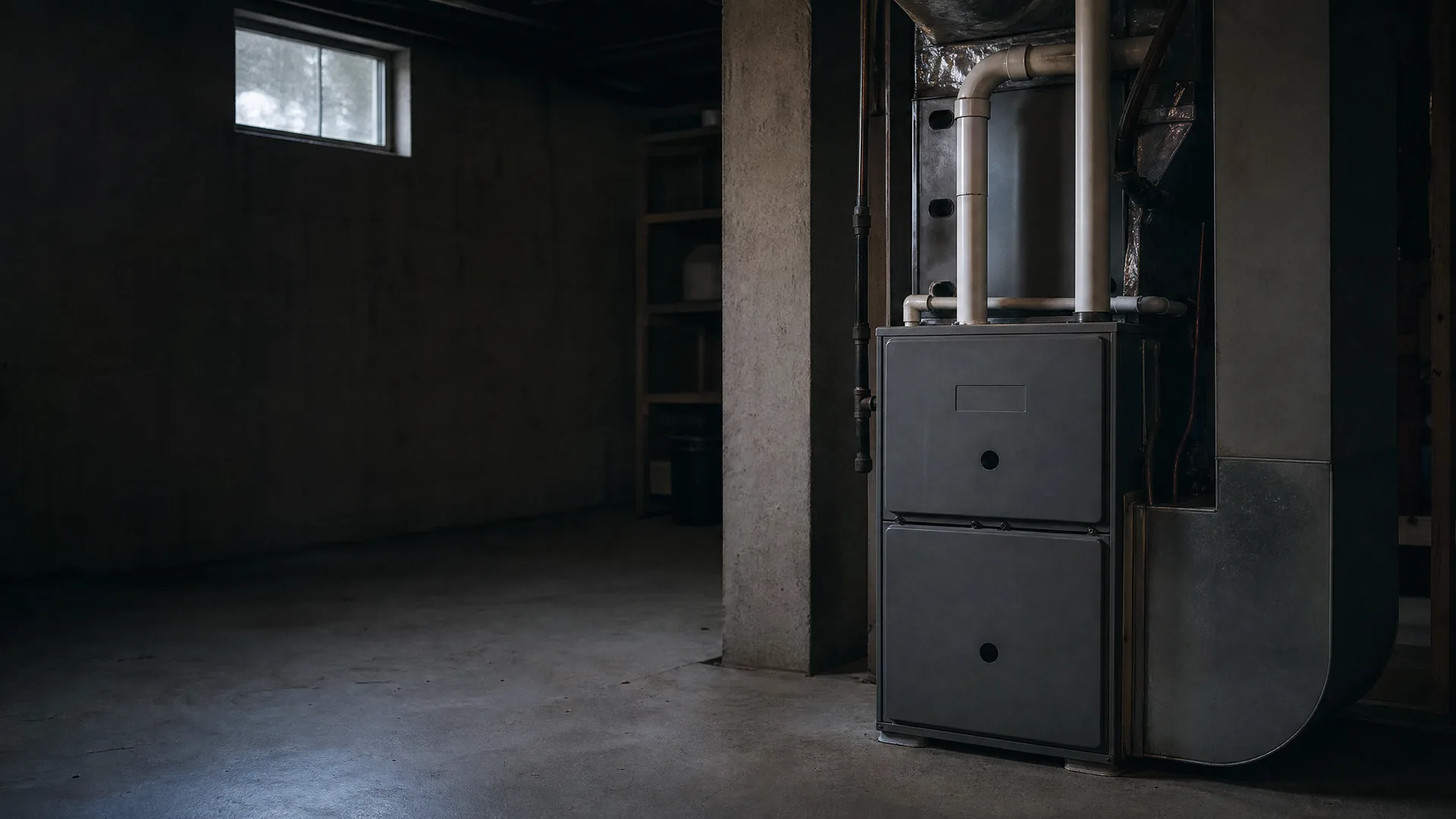
You're down in the basement around six, after dark already. The furnace has been off since you noticed it this morning, and the air near it still holds that burnt smell, faint now, more metal than dust. A little haze hangs under the bare bulb, the kind you only see when the light hits it right. You crouch by the cabinet and put your hand near the vent, nothing, cold metal. Upstairs the house is holding its last warmth. You've already sent the request in. Somewhere out there it's reaching someone who services oil furnaces around here every winter, and for tonight, that's enough. You head back up to wait it out under a blanket.
Done looking for a furnace pro
A burning smell that doesn't clear on its own usually traces back to something specific: a nozzle spraying oil wrong, a cracked heat exchanger, a blower motor straining on bad bearings. Figuring out which one means being in your basement with the furnace running, listening to it and smelling it up close, not guessing from a list of possibilities. That's a job for someone who works on oil furnaces all winter here, not once a year. Vermont runs mostly on oil heat, and the contractors who know these systems see this exact complaint on cold nights when furnaces are running long and hard. With electricity costing what it does here, you don't want a furnace working harder than it should, or shutting down on you in the middle of a stretch like that January cold. Send the request and it goes to one local contractor who handles this equipment regularly, not a handful of companies competing for your callback. That's one less thing to manage while you're trying to figure out if it's safe to keep running the furnace tonight.
Let it run and watch it
If the smell showed up right when you fired the furnace up for the season, give it an hour with a window cracked in the basement. Dust burning off the heat exchanger clears on its own almost every time. Check back at the hour mark. If the smell is gone and hasn't come back on the next few cycles, that was the whole story. You don't need a contractor for this one, and spending money on a service call for a smell that was already fixing itself doesn't help you. Vermont winters are long enough that you'll know within a day or two whether it settled down, since the furnace will be cycling often in that cold.
Call now instead of waiting
If the smell is sharp instead of dusty, or it's still there after that first hour, waiting costs you more than it saves. A cracked heat exchanger or a nozzle spraying oil wrong doesn't improve with more run time. It gets worse the longer the burner fires that way, and at 12°F outside, your furnace is running long stretches, not short bursts, which means more hours of flame against whatever's already damaged. Oil heat and expensive power make a repair bill easier to swallow than a failed furnace in February. Getting someone qualified into your basement this week, instead of after the next cold snap, is the difference between a repair and an emergency.


An oil furnace atomizes fuel through a nozzle at high pressure, and that spray has to hit the right pattern to burn clean inside the firebox.
A worn or misaligned nozzle throws oil unevenly, so some of it burns incomplete and leaves soot on the heat exchanger, which is what you're smelling.
Winter nights average 12°F statewide
At 12°F, your furnace is running most of the night to keep up, not just kicking on for a few minutes here and there. That long, steady burn gives a bad nozzle or a sooty heat exchanger more time to put that smell through the house before morning.
NOAA nClimDiv 1991-2020 county normals weighted by homes


What that burning smell is telling you
- A burning smell that clears within an hour of startup is dust burning off the heat exchanger and nothing to worry about.
- A smell that lingers past that first hour, or turns sharp like plastic or hot metal, points to a specific failing part.
- A worn nozzle, a cracked heat exchanger, or a blower motor on bad bearings each cause a different kind of burning smell.
- Cold nights near 12°F keep your oil furnace running long stretches, giving a bad nozzle or sooty heat exchanger more time to put that smell through the house.
- Finding which part is at fault means checking the furnace in your basement while it runs, not guessing from upstairs.
- A licensed technician who works on oil furnaces in Vermont every winter can usually place the smell to its cause on the first visit.
Start there every time: an hour, a cracked window, and does it clear. That first run of the season burns off dust sitting on the heat exchanger, and the smell goes with it. Past that hour, or if it turns sharp instead of dusty, something inside the furnace is causing it, not just sitting on it. A nozzle spraying oil wrong leaves soot where the dust smell would have cleared. A cracked heat exchanger puts combustion smell into the air it's supposed to keep sealed off. A blower motor running hot on worn bearings smells different again, more like hot metal than smoke. Each one needs a different fix, and from upstairs they can be hard to tell apart. Vermont winters don't make this easier. At 12°F the furnace isn't cycling on for a few minutes and shutting off. It's running long stretches to keep the house warm, and every one of those stretches is more time for a bad nozzle or a sooty heat exchanger to push that smell through the basement and up into the house. With oil heat running most homes here, and power costing what it does in this state, a furnace that's not burning clean is working harder than it should while doing it. Telling the parts apart means someone in the basement with it running, checking the flame, the exchanger, the motor, not guessing from the smell alone.


It's off your list after this
A burning smell that won't quit means something in that furnace needs a hand, and with oil heat and a Vermont winter bearing down, that's not a wait-and-see problem. Sending the form puts it in front of a local contractor who works on oil furnaces all season and knows what a bad nozzle or a cracked heat exchanger smells like. One contractor gets your request, not five, so you're not fielding a pile of calls. From there, it's off your plate.
Your request stays with one local pro.
It costs nothing to send, and you don't have to hire anyone.