A gray high-efficiency furnace with two white PVC vent pipes stands beside galvanized sheet-metal ductwork in a dim basement with exposed joists and a concrete floor.

The right pro for this job

Why your furnace won't shut off in Vermont

A furnace that keeps running, never cycling off, usually means the thermostat or a safety switch isn't telling it to stop. With most Vermont homes on oil heat and power costs among the highest around, a furnace stuck on costs you fast. This page walks through why it happens and matches you with a licensed local contractor who knows oil systems in Vermont winters.

Find a furnace pro

A furnace that won't shut off is usually stuck because the thermostat isn't telling it to stop, or a limit switch inside the furnace thinks the air is still too cool to stop blowing. The thermostat might be wired wrong, set wrong, or just worn out and no longer reading the room right. The limit switch is there to protect the furnace from overheating, and if airflow is restricted, by a clogged filter or blocked ducts, it can read high heat even when the room has long since warmed up, and keep the burner firing. A cracked heat exchanger can do the same thing. None of these fix themselves, and a furnace that runs nonstop on oil burns through fuel fast, on top of the power it draws to keep blowing. The longer it runs past when it should have stopped, the more it's worth having someone look at it before a safety switch fails the other way and shuts the whole system down.

A gray high-efficiency furnace in a basement with PVC vent pipes, sheet-metal ductwork, copper and insulated pipes, a water heater at left, and an unfinished wood-stud wall at right.

Running, but doing its job

This is a furnace cycling the way it should. It fires, it brings the house up to temperature, and it shuts off. If yours looks like this setup and still won't quit running, the problem is likely a stuck relay or a thermostat sending the wrong signal, not the furnace itself failing.


An older beige furnace with louvered front panels stands on a concrete basement floor beside galvanized ductwork, metal and plastic pipes, exposed wood framing, and a cylindrical water heater at right.

Running, but something's wrong

An older furnace like this one has had more years for a limit switch to wear out or a connection to loosen. Galvanized duct and an aging flue are not the cause, but a furnace this age running nonstop is worth having someone look at before a part fails outright.

Is your furnace running nonstop and the house still cold

You hear it in the basement, running through the night and still going when you get up. The thermostat might say you've hit temperature, but the burner keeps firing anyway, or the blower keeps pushing air long after the house feels warm enough. Some rooms get too warm while others stay cold, because the system never gets the chance to rest and balance out. With oil heat, that means the burner keeps cycling fuel it doesn't need to, and with power costs what they are in Vermont, that shows up on your bill fast. Left alone, a furnace that won't stop can wear through a blower motor or a switch that was never built to run that long without a break.

A gray high-efficiency furnace with white PVC venting pipes stands on blocks in a basement next to sheet-metal ductwork, with exposed wood framing on the left and a concrete wall and floor.

Cycling normally

This furnace fires, heats the house, and shuts off on its own. The ductwork and venting are set up the way they should be, and nothing downstream is forcing the burner or blower to keep running past the point it's needed. A furnace built or installed this way gives the thermostat and limit switch a clean signal to work with.

An older gas furnace with two white PVC vent pipes stands on a concrete basement floor beside galvanized sheet-metal ductwork, flexible conduit, and piping along a wall.

Stuck running

An older furnace like this one has more wear on the parts that tell it when to stop, the limit switch, the relay, the gas valve. Years of use loosen connections and wear contacts until the furnace stops listening to the signal to shut off. On oil heat in Vermont, that's a burner running longer than it needs to, on a fuel that isn't cheap to waste.

A gray-haired man in a dark sweater sits on a light gray sofa in a living room, looking toward a sunlit window with trees outside.
A gray-haired man in a dark blue sweater sits on a light gray sofa in a sunlit living room, looking off to the side, with a potted plant, shelving unit, and large glass doors behind him.
A bearded man with graying hair in a dark green sweater sits on a sofa in a living room, looking off to the side, with a sliding glass door and a dim kitchen doorway behind him.
A gray-haired man in a dark knit sweater sits on a light gray sofa in a living room, looking toward a sunlit window, with houseplants, a lamp, and framed art in the background.

Why the limit switch gets fooled

The limit switch sits in the furnace plenum and reads the air temperature right at the source. It's built to shut the burner off if that air ever runs hotter than it should, which normally never happens because the blower is moving heat into the ductwork fast enough to keep up. If a filter is clogged, or a duct is closed off, or the blower slows down, that heat backs up around the switch and it reads a different number than what's actually reaching your rooms. The furnace keeps firing because the switch inside it, not the thermostat, decides when to stop.

What oil furnaces add to this

Oil furnaces run with a cad cell that confirms the flame is actually burning before the sequence continues. A relay failure here can leave the burner motor energized even after the thermostat is satisfied, which is a different failure point than a gas furnace with a simple gas valve. With Vermont's electric rates among the highest in the country, a furnace stuck running isn't a small issue sitting in the background. An oil furnace that won't cycle off is also burning oil the whole time it runs, on top of the power draw from the blower and igniter.

A middle-aged woman with shoulder-length dark hair, wearing a gray cardigan over a cream top, sits in an upholstered armchair and looks toward a sunlit window, with a shelf holding framed pictures and a plant behind her.
A woman and a child wrapped together in a knitted gray blanket on a couch, with the child's head resting on her shoulder and a lit table lamp and houseplant in the background.

Matched to your furnace job

Your request goes to one pro, not a list of companies.

No charge to send it. You decide if you hire them.

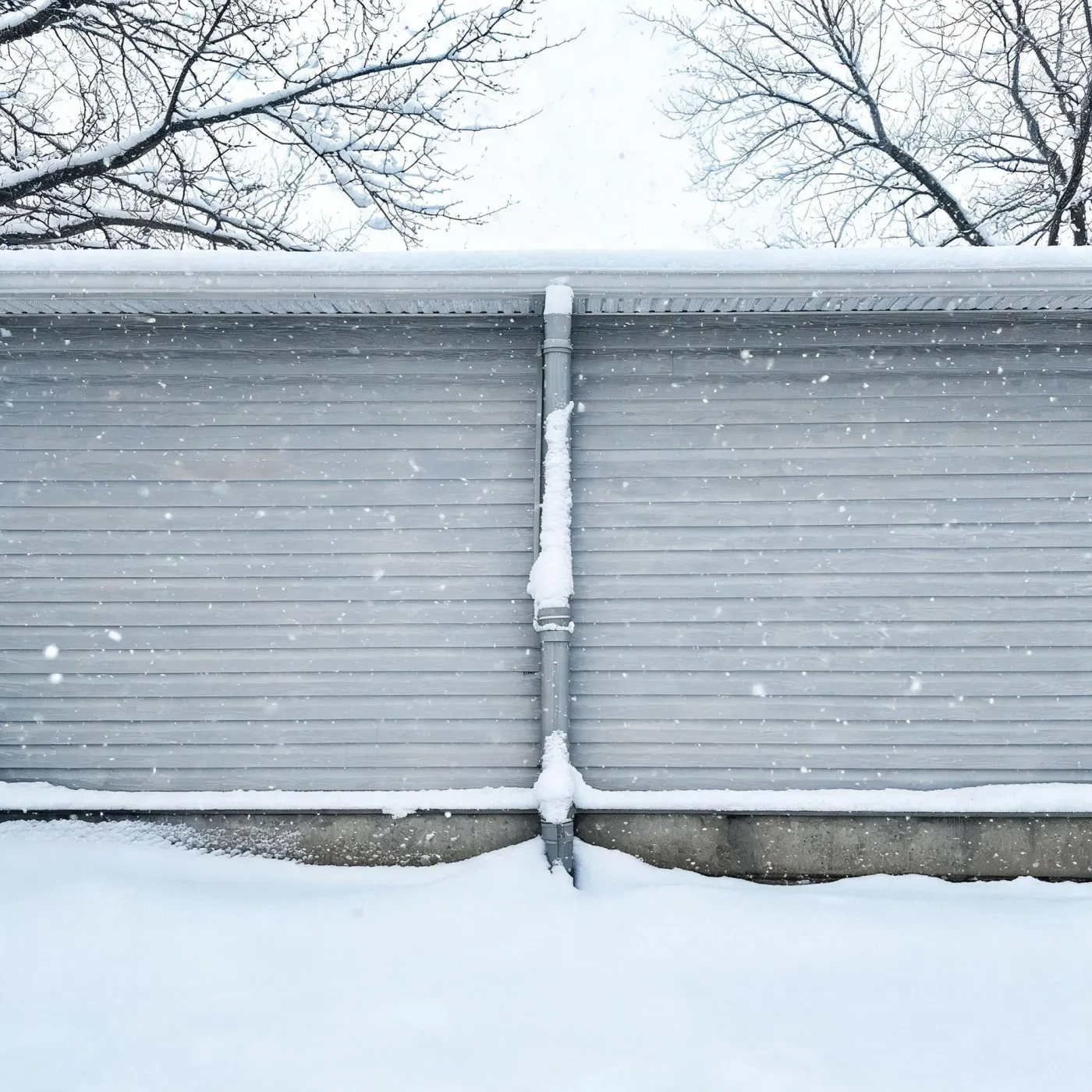
Exterior of a gray horizontal-lap-sided building with a snow-covered roof edge and a central downspout, seen during falling snow with deep snow on the ground and bare tree branches above.

Winter nights statewide average 12°F, according to NOAA climate data. At that temperature your furnace is running close to flat out just to keep the house at setpoint, so a thermostat or limit switch that's even slightly off tends to show up as a furnace that never stops rather than one that short-cycles. You'll notice it most overnight, when outdoor temperatures bottom out and the burner keeps firing well past when the house feels warm. With oil heat, that stuck-on running shows up fast in fuel use, since the burner is cycling fuel the whole time it runs, not just drawing power like a blower would.

NOAA nClimDiv 1991-2020 county normals weighted by homes

Call It In or Wait It Out

Call it in

  • A furnace that won't stop running can mean a cracked heat exchanger, and that's not something to leave while you wait and see.
  • Oil furnaces have their own ignition and limit components that a tech who works on oil systems locally will recognize faster than someone used to gas units.
  • A stuck relay or a bad limit switch usually needs a meter and a furnace apart to find, not a guess from the thermostat dial.
  • If the furnace runs nonstop through a 12°F night, you're burning oil that whole time, and oil doesn't get cheaper if the fix waits.
  • A licensed tech who covers your area can trace whether it's the thermostat, the switch, or the wiring between them, and fix the one that's actually bad.

Wait it out

  • Letting it run might still heat the house tonight, so the cold isn't the thing forcing your hand.
  • If the cause is just a thermostat setting or a loose wire, it's possible to spot and fix without a service call.
  • The furnace running longer than it should still protects the house from freezing pipes while you sort out next steps.
  • A furnace that won't shut off isn't necessarily about to fail outright, so there's no fixed clock on when you have to act.
  • Every day it runs past where it should, Vermont's electric rates and oil both keep adding to a bill you can't see yet.
  1. Thermostat calls for heat and the burner ignites on schedule

  2. Oil burns and heats air moving through the plenum

  3. Limit switch reads plenum air, waiting for it to reach cutoff

  4. Thermostat reaches setpoint and signals the burner to stop

A beige high-efficiency furnace stands on a concrete basement floor beside sheet-metal ductwork, with white PVC vent pipes, flexible conduit and copper and steel piping running up a concrete wall to an electrical box.
Clean venting, clear gas line, nothing fighting the burner to shut off when it should.
An older gas furnace with a louvered front panel stands on a concrete basement floor beside large sheet-metal ductwork, a metal flue pipe, copper piping and wood framing.
Dust built up around the base like this often sits alongside a furnace that won't quit running.
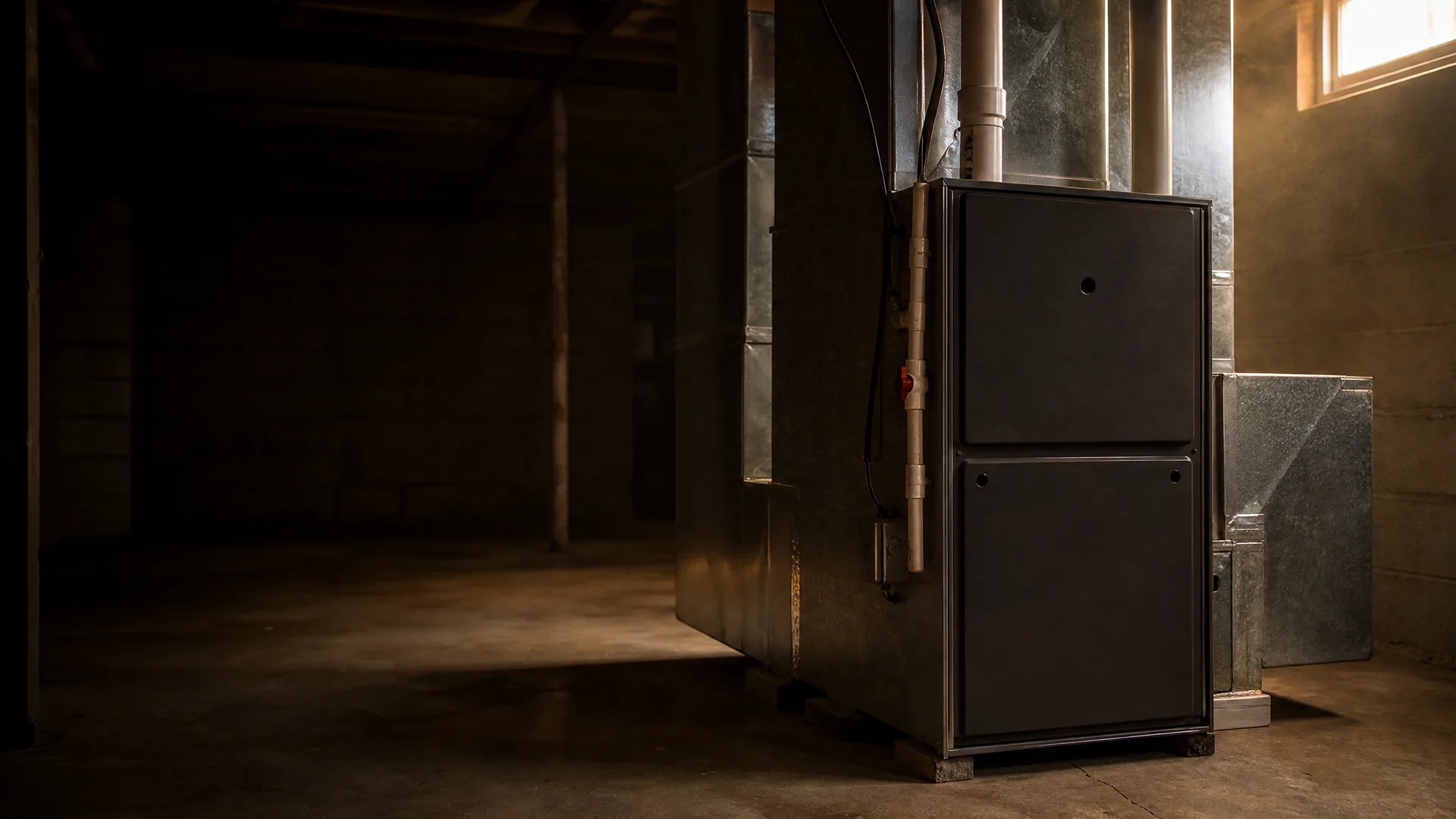
A dark residential basement with a concrete floor and block walls, containing a furnace with two access panels connected to galvanized sheet-metal ductwork and a white vent pipe, lit by a small window at upper right.

It's past six and already dark outside. You go down to the basement to grab something off the shelf and the furnace is sitting there dead, no hum from the blower, no flicker from the burner. Cold metal, cold air around it. A thin haze of dust hangs near the cabinet, lit up in the bulb overhead, the kind that settles when a furnace has been running long and hard and nobody's wiped it down. Upstairs the thermostat still reads low. You stand there a second, waiting for it to kick back on like it always does. It doesn't.

Winter nights average 12°F statewide

At 12°F, your furnace is running long stretches just to hold the house at setpoint. That's normal. What's not normal is it never getting a break at all, night after night, with the thermostat satisfied and the burner still going.

NOAA nClimDiv 1991-2020 county normals weighted by homes

A gray high-efficiency furnace with two access panels stands in a bare basement corner, connected to sheet-metal ductwork, white PVC vent pipes, and flexible gas and electrical lines.

Leave it running and see

Some homeowners wait a night or two to see if the furnace shuts off on its own, especially if the house feels warm enough. That might cost you less in the short run than a service call. But oil doesn't stop burning because you're hoping it will, and a furnace that won't cycle is pulling fuel the whole time it runs, not just during the minutes it actually needs to heat the house.

A gas furnace with metal ductwork, copper and yellow gas piping stands against a wall in an empty room with a bare concrete floor.

Get a local tech on it

A tech who works on oil furnaces around Vermont every winter has seen this before, usually a thermostat that's failed to call for stop, or a limit switch misreading the plenum. One contractor means one visit, one person looking at your wiring and your burner instead of three different guesses. With oil prices and electric rates both working against you, a furnace stuck on is money leaving the house every hour it runs.

A man in a dark blue shirt stands in an open front doorway of a stucco and wood-clad house, facing a blond woman seen from behind in the foreground on a stone walkway.

A furnace that won't shut off is telling you something specific

A thermostat that's stopped reading the room right, or a limit switch convinced the air is still too cool, keeps the burner going past the point it should have stopped. That's the short version of everything above. It's not a mystery once someone's hands are on the thermostat wiring and the switch inside the plenum.

Oil furnaces have their own quirks, and a technician who services them around Vermont every winter has likely already seen whatever is going on in your basement. Getting matched with one contractor, local to you and licensed to work on your system, means one call back instead of a handful of strangers competing for the job. You'll know who's showing up and why they're qualified to be there before they knock.

A living room corner with a beige sofa and cushion, a round wooden coffee table holding a pale ceramic vase of eucalyptus stems and a wooden bowl, and a curtained window with a potted plant above a latticed radiator cover in the background.
A dark gray high-efficiency furnace with two white vent pipes and connected sheet-metal ductwork stands in an unfinished basement with concrete walls, a support pole, and a small window.

A furnace pro near you

Step 1 of 3: Equipment