Tell us about the job
Takes about a minute. No obligation.
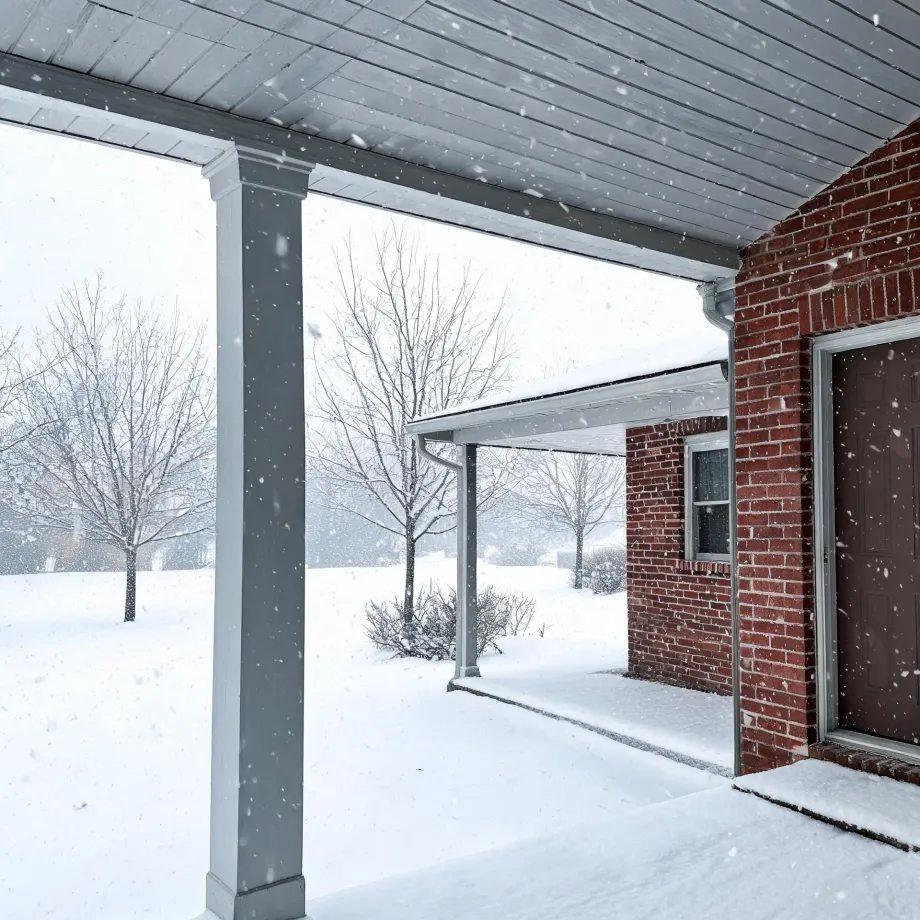
A furnace quoted for Orleans County has to be sized for a burner that works hard and rests little. Homes in Orleans County, VT run heat about nine months a year, from September through May. The heat exchanger, the ignition system, and the burner itself accumulate wear in direct proportion to how many months they cycle, and a unit that is undersized runs longer per call on top of that. A contractor doing the load calculation here is not working from a generic chart. They are accounting for a heating demand that leaves the equipment little slack, which means an install done to a loose standard shows its faults before the homeowner is ready for them.
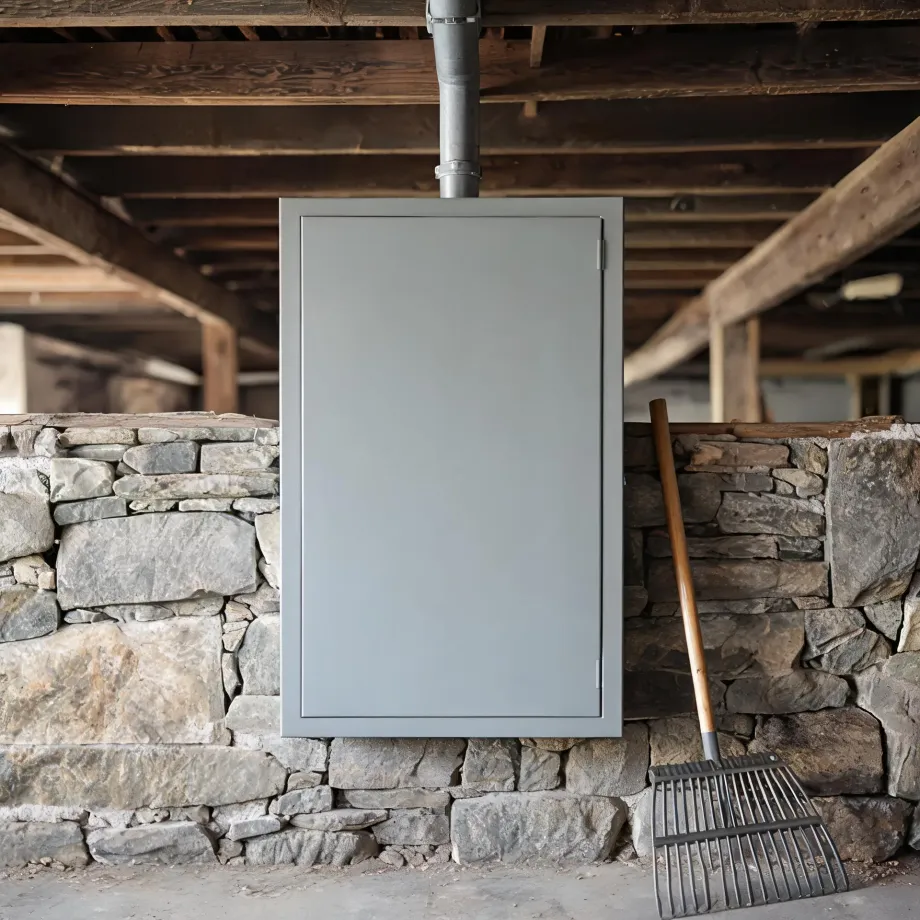
Existing ductwork is what decides how a furnace installation goes in much of this county. Half the homes in Orleans County, Vermont were built in 1978 or earlier (2020-2024 ACS 5-year). A house built that long before today's high-efficiency furnaces were designed will often have duct runs laid out for different airflow rates and static pressure profiles than a new unit produces. A contractor sizing and placing a new furnace here checks the duct system before quoting the equipment, because a mismatch between the two shifts the job from a straightforward swap to a duct modification project with a different scope and a different price.
What a Furnace Installation Puts in Your Home
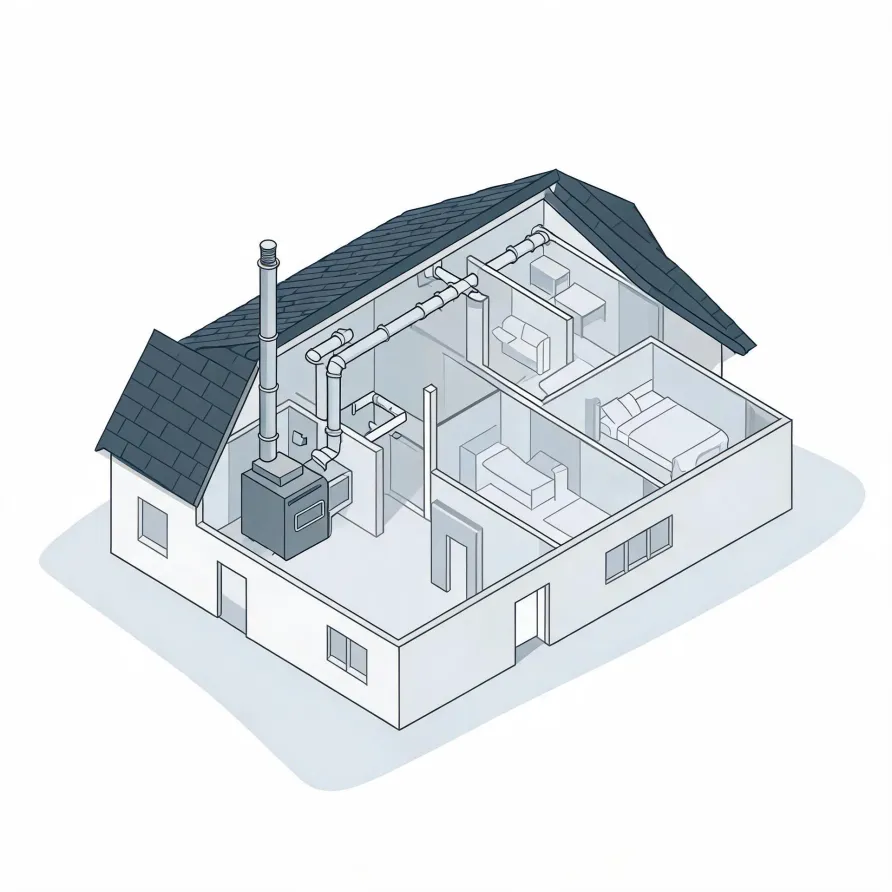
The furnace itself sits in a mechanical room, basement, or utility closet and is the unit a homeowner notices first. It holds the heat exchanger, the burner assembly, and the blower. The heat exchanger is the metal chamber where combustion happens, and the blower is the fan that pushes conditioned air out into the house.
A flue pipe runs from the furnace to an exterior wall or through the roof, carrying combustion gases out of the living space. Alongside it, the contractor fits a filter housing and a thermostat, the filter housing where return air enters the unit and the thermostat on an interior wall where it reads the air temperature and signals the furnace to fire.
The drawing shows a typical layout, and a licensed contractor determines exactly what applies to your house.
Find a contractor in Orleans CountyOrleans County, by the numbers
87 severe weather events were recorded in Orleans County, Vermont between 2015 and 2024.
NOAA National Centers for Environmental Information, Storm Events Database, bulk CSV export, events 2015-01-01 through 2024-12-31.Half the homes in Orleans County, Vermont were built in 1978 or earlier (2020-2024 ACS 5-year).
U.S. Census Bureau, 2020-2024 American Community Survey 5-Year EstimatesOrleans County, Vermont holds 16,751 housing units (2020-2024 ACS 5-year).
U.S. Census Bureau, 2020-2024 American Community Survey 5-Year EstimatesOwners occupy 79.7% of the occupied homes in Orleans County, Vermont (2020-2024 ACS 5-year).
U.S. Census Bureau, 2020-2024 American Community Survey 5-Year EstimatesFurnace & HVAC Installation Rules for Orleans County, Vermont6 codes, standards & licensing rules
What the Installation Actually Looks Like
Non-weatherized gas furnaces manufactured on or after November 19, 2015 must reach 80.0 percent AFUE.
Non-weatherized oil-fired furnaces manufactured on or after November 19, 2015 must reach 83.0 percent AFUE.
Mobile home gas furnaces manufactured on or after November 19, 2015 must reach 80.0 percent AFUE.
Non-weatherized gas furnaces manufactured on or after December 18, 2028 must reach 95.0 percent AFUE, up from the 80.0 percent minimum that applies to units manufactured before that date.
Licensing Rules for HVAC Work in Orleans County, Vermont
Vermont splits the trade across two specialty licences and a contractor may hold one without the other: field A1 covers automatic gas or oil heating including geo-thermal and ground source heat pumps, and field C3 covers refrigeration or air conditioning including air-to-air heat pumps.
Vermont reaches HVAC work through its electricians’ licence rather than an HVAC licence, and the requirement stops at the front door of a house: anyone performing electrical work in Vermont must be licensed as an electrician unless the work is in a residential building containing two or fewer dwelling units.
Severe Weather Events in Orleans County
Vermont winters put real load on heating equipment, and what happens in Orleans County shapes how hard a furnace has to work and for how long. Installation decisions made without that local context are just guesses.
87 severe weather events, 2015–2024. Source: NOAA National Centers for Environmental Information, Storm Events Database.