Tell us about the job
Takes about a minute. No obligation.
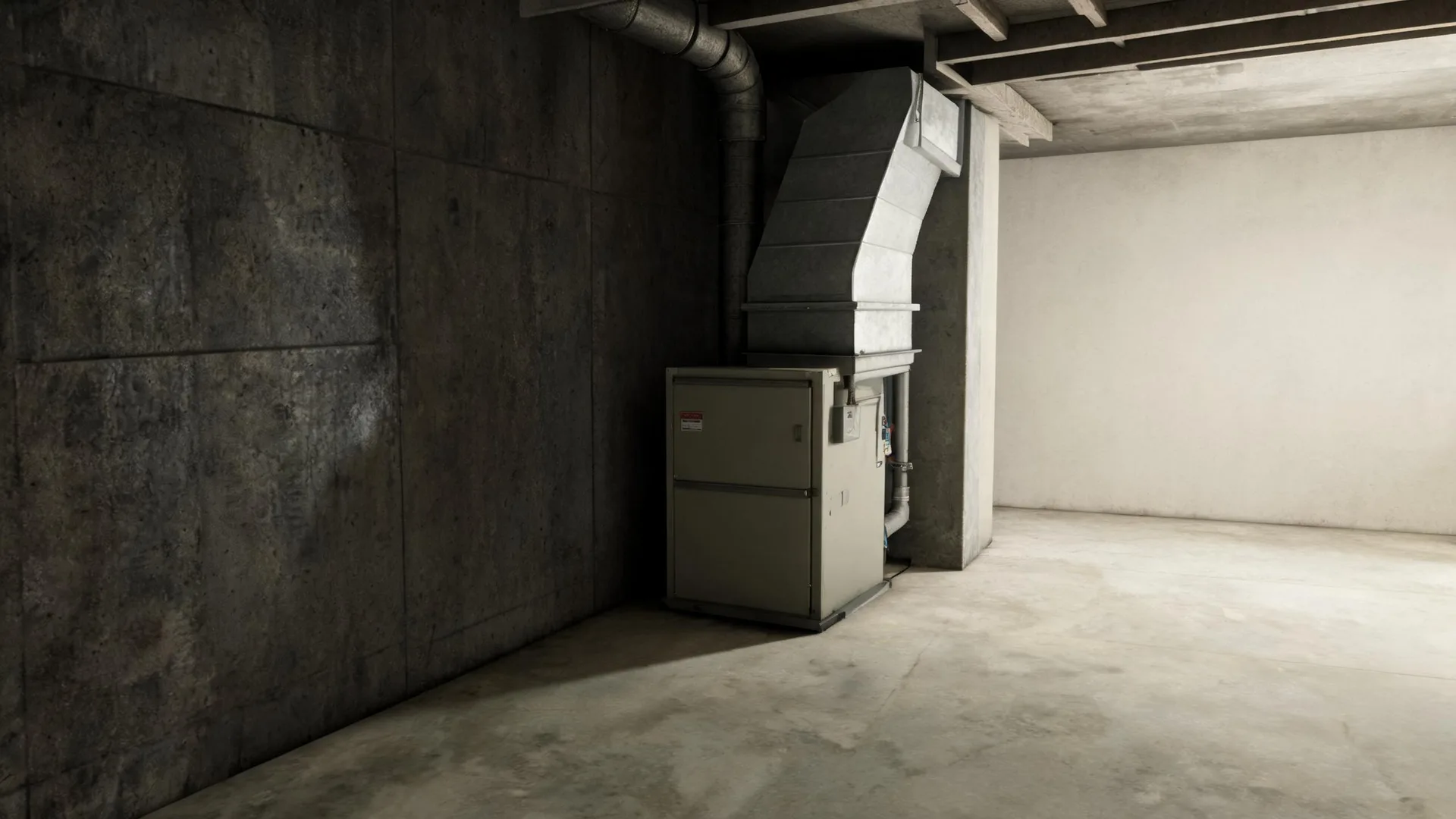
Sizing a furnace for a Bennington County home starts with understanding what the burner and heat exchanger are actually being asked to carry. Homes in Bennington County, VT run heat about nine months a year, from September through May. A heat exchanger that cycles through cold after cold, month after month, accumulates stress at every joint and weld. An undersized furnace compensates by running longer cycles, which puts that stress on sooner. Duct sealing and combustion air matter here too, because a long heating season turns a small installation shortcut into a recurring efficiency loss the homeowner pays for every month the system runs.
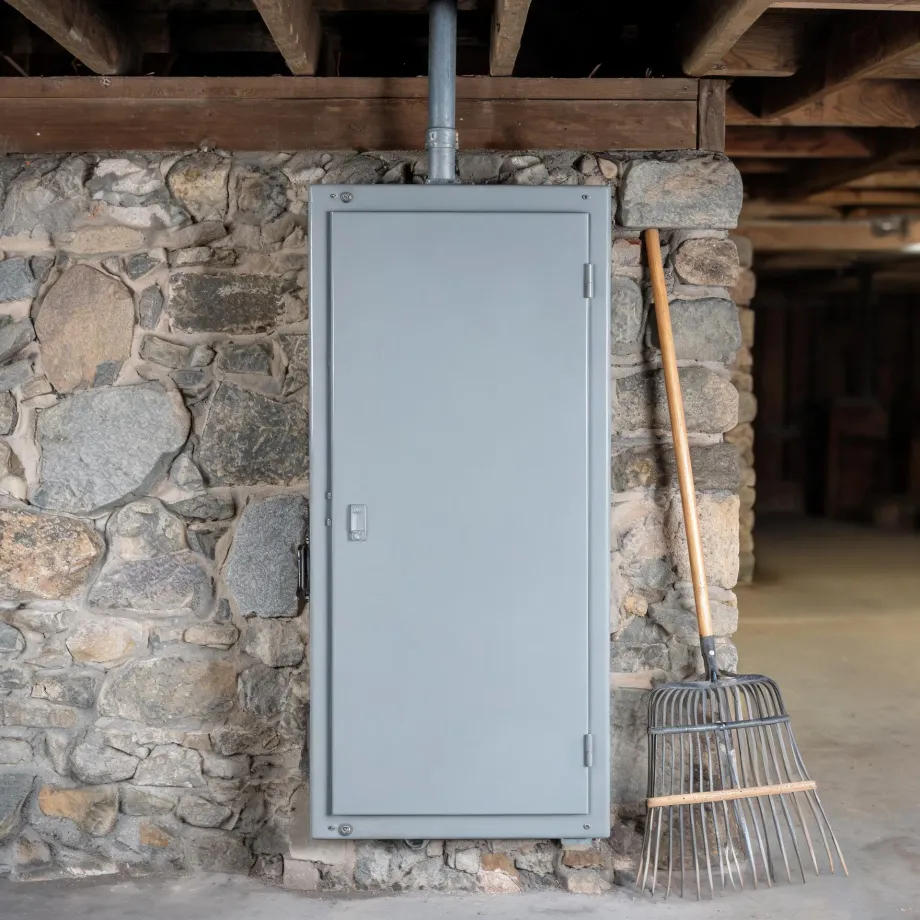
Ductwork laid for an earlier generation of equipment is what a furnace installation runs into here. Half the homes in Bennington County, Vermont were built in 1972 or earlier (2020-2024 ACS 5-year). A house built then was ducted around whatever that era's systems required, and those proportions and layouts do not automatically suit what a contractor is putting in now. If the existing duct runs are too narrow, too leaky, or routed in ways that create pressure problems, the installation has to account for that before the new furnace goes in. The electrical service gets the same look, since a panel sized for a smaller load may need an upgrade to carry the new unit safely.
What a Furnace Installation Puts in Your Home
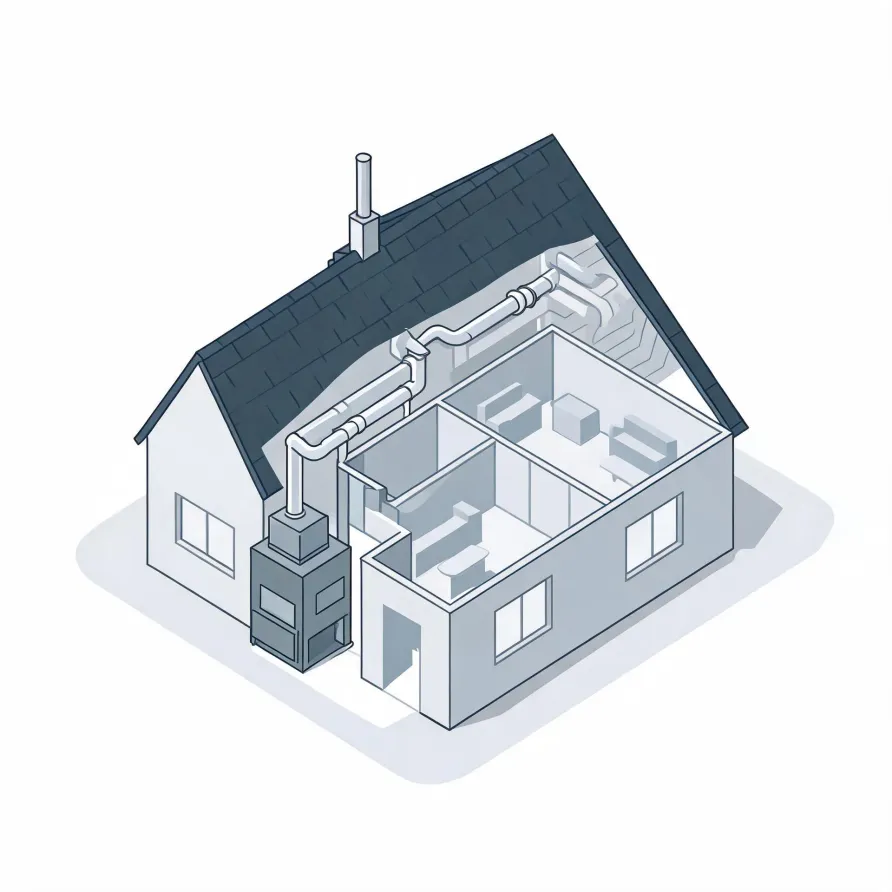
The furnace itself sits in a mechanical room, basement, or utility closet and is the unit a homeowner is most likely to walk past every day. It holds the burner assembly, the heat exchanger, and the blower. Those three components occupy the same cabinet and are what a contractor sets in place first.
The flue pipe runs from the furnace up and out of the house, carrying combustion gases away. Alongside the furnace, a contractor also positions the air handler or plenum that connects the unit to the supply and return air paths, and sets the thermostat on an interior wall where it can read the home's actual temperature.
The drawing shows a typical layout, and a licensed contractor determines exactly what applies to this house.
Find a contractor in Bennington CountyBennington County, by the numbers
165 severe weather events were recorded in Bennington County, Vermont between 2015 and 2024.
NOAA National Centers for Environmental Information, Storm Events Database, bulk CSV export, events 2015-01-01 through 2024-12-31.Half the homes in Bennington County, Vermont were built in 1972 or earlier (2020-2024 ACS 5-year).
U.S. Census Bureau, 2020-2024 American Community Survey 5-Year EstimatesBennington County, Vermont holds 20,903 housing units (2020-2024 ACS 5-year).
U.S. Census Bureau, 2020-2024 American Community Survey 5-Year EstimatesOwners occupy 73.7% of the occupied homes in Bennington County, Vermont (2020-2024 ACS 5-year).
U.S. Census Bureau, 2020-2024 American Community Survey 5-Year EstimatesFurnace Installation Rules for Bennington County, Vermont6 sourced standards and codes
What the Installation Actually Looks Like
Non-weatherized gas furnaces manufactured on or after November 19, 2015 must reach 80.0 percent AFUE.
Non-weatherized oil-fired furnaces manufactured on or after November 19, 2015 must reach 83.0 percent AFUE.
Mobile home gas furnaces manufactured on or after November 19, 2015 must reach 80.0 percent AFUE.
Non-weatherized gas furnaces manufactured on or after December 18, 2028 must reach 95.0 percent AFUE, up from the 80.0 percent minimum that applies to units manufactured before that date.
Licensing and Legal Requirements in Bennington County, Vermont
Vermont splits the trade across two specialty licences and a contractor may hold one without the other: field A1 covers automatic gas or oil heating including geo-thermal and ground source heat pumps, and field C3 covers refrigeration or air conditioning including air-to-air heat pumps.
Vermont reaches HVAC work through its electricians’ licence rather than an HVAC licence, and the requirement stops at the front door of a house: anyone performing electrical work in Vermont must be licensed as an electrician unless the work is in a residential building containing two or fewer dwelling units.
Weather Stress on HVAC Equipment in Bennington County
Bennington County winters put real load on furnaces, and a system sized or installed without accounting for local conditions will run harder and fail sooner. How often severe weather hits this area shapes what the equipment here has to handle.
165 severe weather events, 2015–2024. Source: NOAA National Centers for Environmental Information, Storm Events Database.