Tell us about the job
Takes about a minute. No obligation.
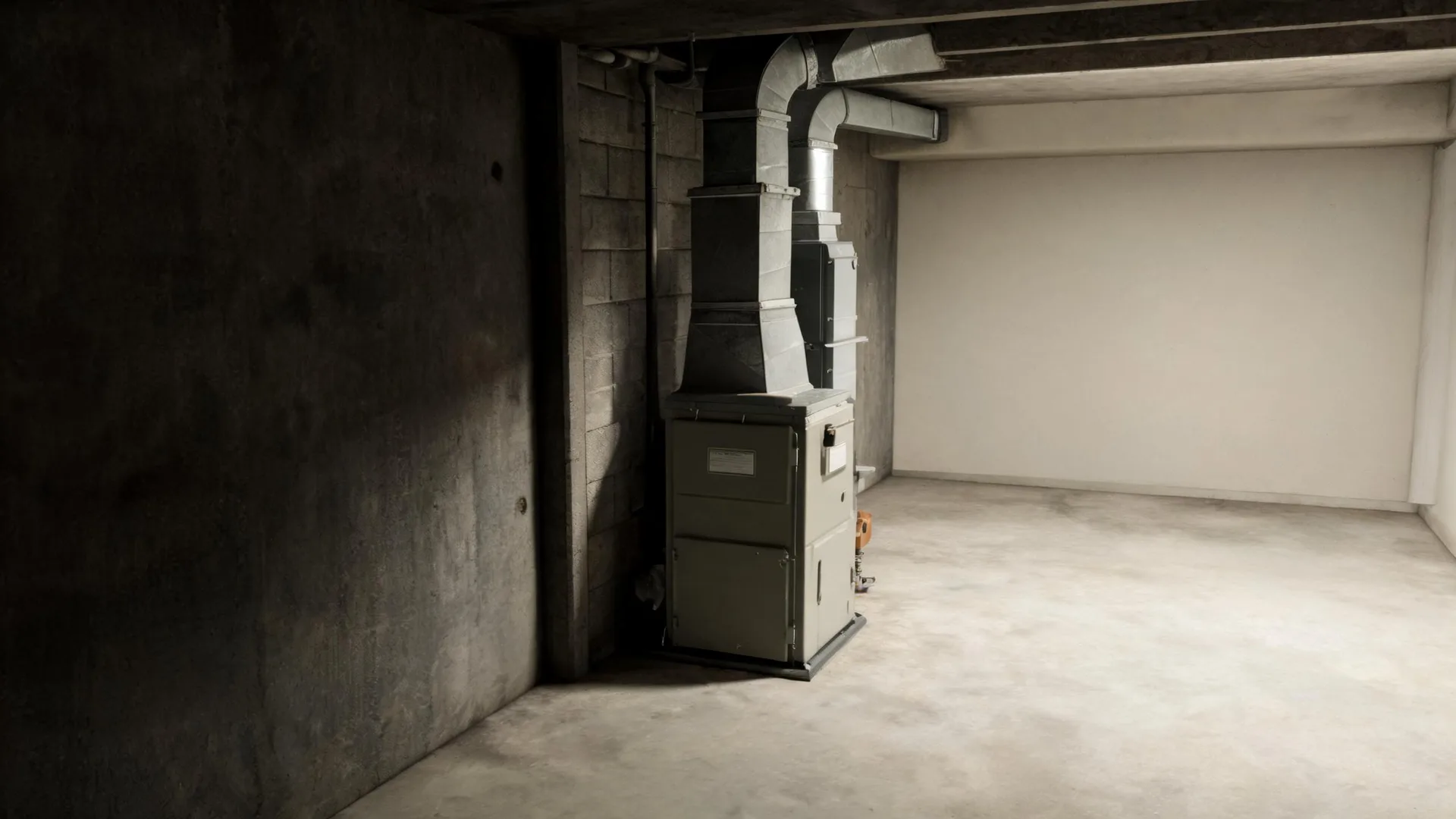
A furnace repair in Rutland County starts with what the equipment has already been through. Homes in Rutland County, VT run heat about nine months a year, from September through May. The burner cycles through that stretch every year, and so does the ignition system. A contractor opening a furnace here expects to find wear on the heat exchanger and ignition components first, because those are the parts that take the load on every call for heat. Cracks in the exchanger and failed igniters are common findings, not coincidences.
Furnaces running in houses this old are often on their second or third replacement cycle, which means the unit a contractor opens may predate the parts now on supplier shelves. Half the homes in Rutland County, Vermont were built in 1969 or earlier (2020-2024 ACS 5-year). That gap between the building and the equipment matters for repair specifically: a contractor pulling a heat exchanger or a gas valve in stock like this has to confirm availability before quoting, because a discontinued part changes a repair into a replacement conversation.
The Parts of a Furnace a Contractor Checks First
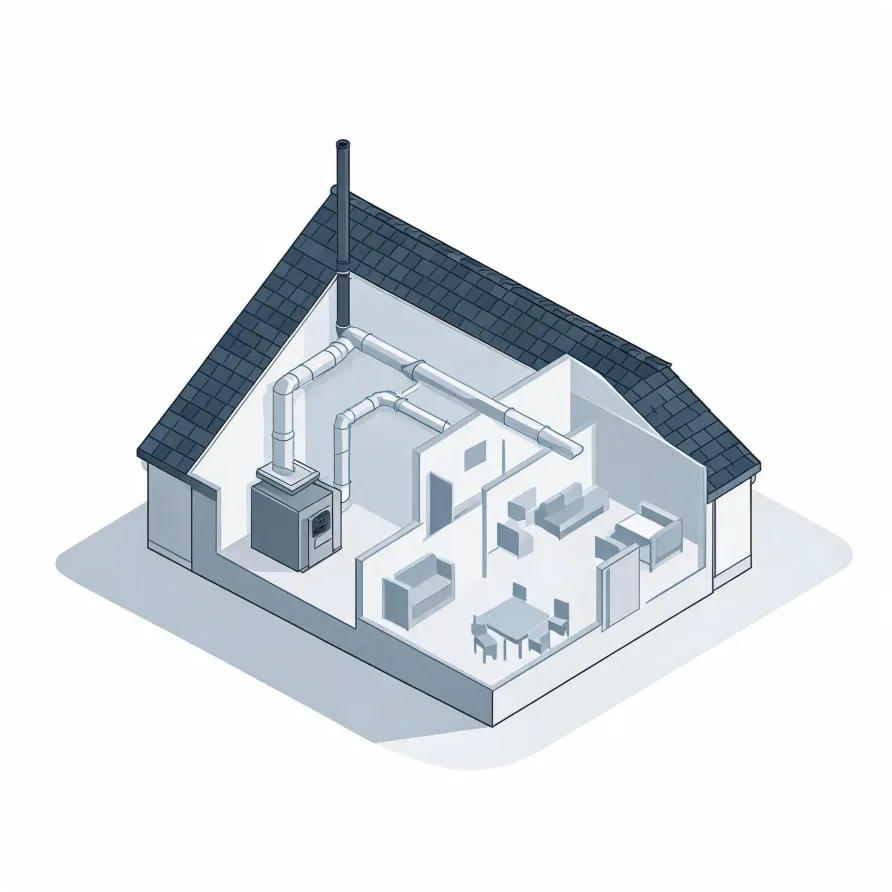
The furnace itself sits in the basement, utility room, or mechanical closet and is the heart of the system. Inside it, the heat exchanger is the piece a contractor looks at closely during a repair call. Cracks or failures there mean combustion gases can enter living spaces, so it draws immediate attention. The burner assembly, which ignites the fuel and produces the heat, is another early stop.
The blower motor sits within the furnace cabinet and pushes conditioned air out through the supply side of the house. The flue or venting pipe runs from the cabinet to the exterior and carries exhaust gases out. The control board governs the whole sequence, and when a furnace behaves erratically or refuses to start, a contractor will test that board alongside the igniter and the flame sensor.
The drawing beside this text shows a typical furnace layout, and a licensed contractor determines which components apply to the specific system in your home.
Find a contractor in Rutland CountyRutland County by the Numbers
178 severe weather events were recorded in Rutland County, Vermont between 2015 and 2024.
NOAA National Centers for Environmental Information, Storm Events Database, bulk CSV export, events 2015-01-01 through 2024-12-31.Half the homes in Rutland County, Vermont were built in 1969 or earlier (2020-2024 ACS 5-year).
U.S. Census Bureau, 2020-2024 American Community Survey 5-Year EstimatesRutland County, Vermont holds 33,991 housing units (2020-2024 ACS 5-year).
U.S. Census Bureau, 2020-2024 American Community Survey 5-Year EstimatesOwners occupy 75.1% of the occupied homes in Rutland County, Vermont (2020-2024 ACS 5-year).
U.S. Census Bureau, 2020-2024 American Community Survey 5-Year EstimatesCodes & Standards Governing Furnace Repair in Rutland County, Vermont6 sourced rules and standards
What Furnace Repair Looks Like in Rutland County
Non-weatherized gas furnaces manufactured on or after November 19, 2015 must reach 80.0 percent AFUE.
Non-weatherized oil-fired furnaces manufactured on or after November 19, 2015 must reach 83.0 percent AFUE.
Mobile home gas furnaces manufactured on or after November 19, 2015 must reach 80.0 percent AFUE.
Non-weatherized gas furnaces manufactured on or after December 18, 2028 must reach 95.0 percent AFUE, up from the 80.0 percent minimum that applies to units manufactured before that date.
Licensing and Legal Requirements in Rutland County, Vermont
Vermont splits the trade across two specialty licences and a contractor may hold one without the other: field A1 covers automatic gas or oil heating including geo-thermal and ground source heat pumps, and field C3 covers refrigeration or air conditioning including air-to-air heat pumps.
Vermont reaches HVAC work through its electricians’ licence rather than an HVAC licence, and the requirement stops at the front door of a house: anyone performing electrical work in Vermont must be licensed as an electrician unless the work is in a residential building containing two or fewer dwelling units.
Severe Weather Events in Rutland County, Year by Year
Weather in Rutland County puts real load on furnaces. Every hard stretch of cold or storms your equipment weathers is a reason repair needs come up, which is why local weather history belongs on a page about keeping your furnace running.
178 severe weather events, 2015–2024. Source: NOAA National Centers for Environmental Information, Storm Events Database.